

What's Happening?
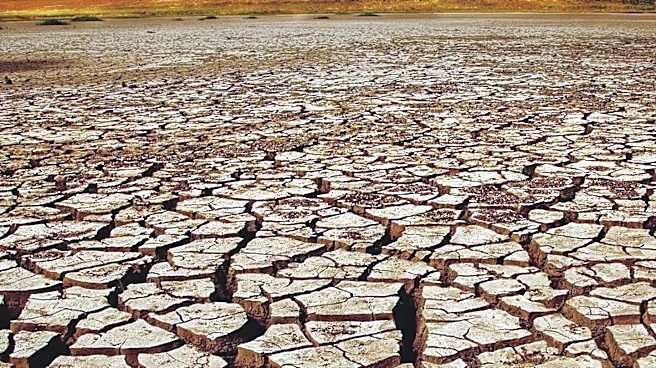
California's Sacramento Valley aquifer system has suffered irreversible damage due to prolonged drought conditions and excessive groundwater extraction. The aquifer, crucial for supplying water to California's Central Valley, has seen a significant reduction
in its storage capacity. This reduction is attributed to inelastic compaction, where the ground above the aquifer subsides and does not rebound even when groundwater levels recover. Satellite data has revealed that the loss of water storage space has increased five-fold since 2021, equating to about 30% of Los Angeles's annual water consumption. This situation poses a serious threat to California's water resources and infrastructure.
Why It's Important?
The permanent reduction in the aquifer's capacity has significant implications for California's water supply, particularly in the Central Valley, which is a major agricultural hub producing a quarter of the U.S. food supply. The inability to store as much water could exacerbate water scarcity issues, affecting agriculture, communities, and ecosystems dependent on this resource. The findings highlight the urgent need for improved water management strategies and the potential of space-based monitoring to detect groundwater overdraft early. This situation underscores the broader challenges posed by climate change and the need for sustainable water use practices.
What's Next?
The study suggests that real-time monitoring of surface displacements through satellite geodesy could enable early detection of groundwater overdraft, potentially reducing storage loss through timely remedial actions. Developing such capabilities is critical, especially in regions where in-situ monitoring is unviable. Policymakers and water management authorities may need to implement stricter regulations on groundwater extraction and invest in technologies to enhance water conservation and efficiency. The situation calls for a coordinated response to address the long-term sustainability of water resources in drought-prone areas.