






What's Happening?
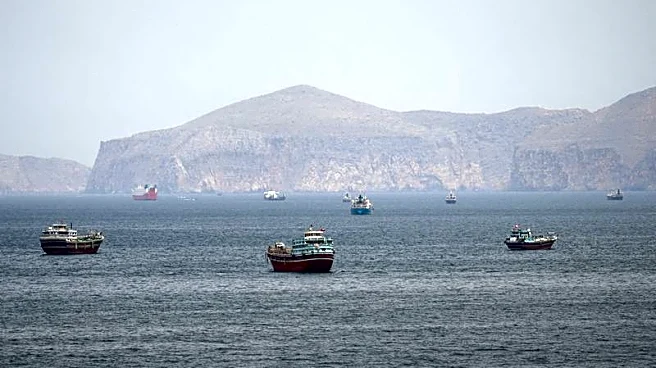
The Organisation for Economic Co-operation and Development (OECD) has issued a warning that a prolonged conflict in the Middle East, particularly involving Iran, could lead to a global recession and heightened inflation. The ongoing risk to shipping through
the Strait of Hormuz has significantly reduced traffic, impacting global supplies of crude oil, fuel products, and natural gas. This disruption is expected to slow global growth to 2.1% in 2026 and 1.8% in 2027, potentially pushing some economies into recession. The OECD highlights that energy-related costs are the primary driver of inflationary pressures, affecting shipping, groceries, and fertilizer prices.
Why It's Important?
The potential global recession and inflationary pressures could have widespread impacts on various economies, particularly those heavily reliant on energy imports from the Middle East. Asian economies and poorer countries, where a significant portion of income is spent on fuel and food, are expected to be hardest hit. The U.S. retail sector is also bracing for increased consumer stress, with lower-income households pulling back on spending due to inflation. The OECD emphasizes the need for targeted government spending to alleviate energy costs without increasing government debt.
What's Next?
The OECD suggests that if energy production and shipments from the Gulf return to pre-war levels by mid-year, global growth could slow to 2.8% this year and rebound to 3.1% next year. However, the longer the disruptions last, the larger the economic and social costs become. Governments may need to implement temporary measures to support those most affected by rising energy costs while encouraging energy savings.
Beyond the Headlines
The OECD's warning follows a UN study indicating that higher energy prices will impact nearly a billion people in poorer countries and small island states dependent on imported fuel. This could force tradeoffs between covering energy bills and investing in essential public services, exacerbating poverty levels.