





What's Happening?
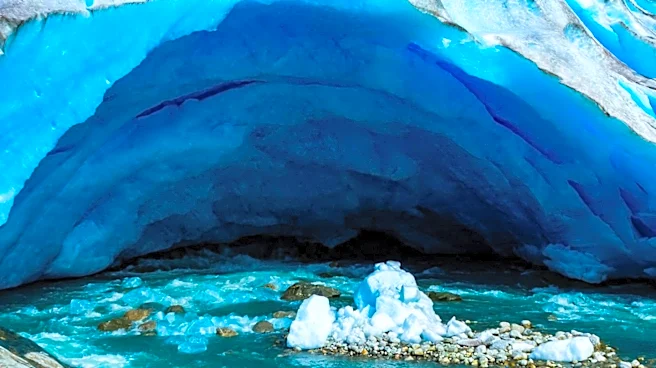
Exit Glacier, located in Alaska's Kenai Fjords National Park near Seward, is experiencing significant retreat. Signs along the hiking trail and drive into the national park mark the glacier's former positions, some dating back to the 1800s, with more
recent markers showing its location in 2010. The glacier, once easily accessible for close-up viewing, has receded considerably up the valley. This retreat has transformed the surrounding landscape, making the area a prime example of primary ecological succession. As the glacier melts, it leaves behind bare rock and glacial sediment, which are then colonized by pioneer species like mosses, gradually leading to the development of forests. This process is evident in the differing forest characteristics compared to denser Alaskan forests, with less devil's club and thick evergreen foliage in areas recently exposed by the glacier's retreat. The Exit Glacier Nature Center provides a starting point for visitors to observe these changes.
Why It's Important?
The retreat of Exit Glacier is a tangible indicator of broader climate change impacts, particularly in Alaska, which hosts a significant portion of the Earth's glaciers. Alaska's glaciers contribute substantially to global sea-level rise, and their accelerated mass loss is driven by warming air and ocean temperatures. The visible retreat of Exit Glacier serves as an educational tool, allowing visitors to directly observe the effects of long-term climate change. For the tourism industry, the changing landscape of Exit Glacier impacts visitor experiences, with some finding the current views less impressive compared to other glaciers accessible by boat tours or more challenging hikes. This shift may influence how tourists plan their visits to Kenai Fjords National Park and other Alaskan glacial attractions, potentially increasing demand for alternative glacier viewing opportunities. The ecological succession occurring at Exit Glacier also offers valuable insights for environmental scientists studying how ecosystems adapt to glacial melt.
What's Next?
The continued retreat of Exit Glacier is expected, driven by ongoing warming trends. This will likely lead to further changes in the landscape and the ongoing process of ecological succession. For visitors, the experience of viewing Exit Glacier will continue to evolve, potentially necessitating new interpretive programs and viewing platforms to adapt to the glacier's changing position. Park authorities may need to adjust trail access and information provided to manage visitor expectations and ensure safety. The focus for visitors might shift further towards understanding the ecological processes and the broader implications of glacial retreat rather than solely on close-up glacier views. The accessibility of the Exit Glacier Overlook trail will likely remain a draw for those seeking a shorter, easier walk, while more demanding hikes like the Harding Icefield Trail will continue to offer more extensive glacier views.
Beyond the Headlines
The visible retreat of Exit Glacier underscores the profound and long-term environmental shifts occurring in polar and subpolar regions. Beyond the immediate impact on tourism and local ecosystems, the phenomenon highlights the interconnectedness of global climate systems. The study of ecological succession at Exit Glacier provides a living laboratory for understanding how life reclaims and transforms landscapes after significant environmental disturbances. This natural process offers insights into resilience and adaptation within ecosystems, which can inform conservation strategies in other areas affected by climate change. The historical markers along the trail serve as a stark reminder of the rapid pace of environmental change within a human lifetime, prompting reflection on human impact and the urgency of climate action. The experience at Exit Glacier can foster a deeper appreciation for natural processes and the delicate balance of the environment.