




What's Happening?
Arkansas State University (A-State) has secured a $2.2 million grant from the National Science Foundation (NSF) to spearhead a multi-institutional research initiative. This project aims to enhance drought tolerance in rice and wheat, two critical global
food crops. The funding, provided through the NSF's Established Program to Stimulate Competitive Research (EPSCoR) Research Infrastructure Improvement, will support a four-year study. Dr. Argelia Lorence, a professor of metabolic engineering, will lead the research, with Dr. Scott A. Mangan, associate professor of ecology, serving as co-principal investigator. A-State is collaborating with the University of Kansas, the University of Nebraska, and Kansas State University on this endeavor. The research will investigate how beneficial soil fungi, specifically arbuscular mycorrhizal (AM) fungi, can help these crops better withstand water stress. The project commenced on August 1st and is scheduled to conclude on July 31st, 2030.
Why It's Important?
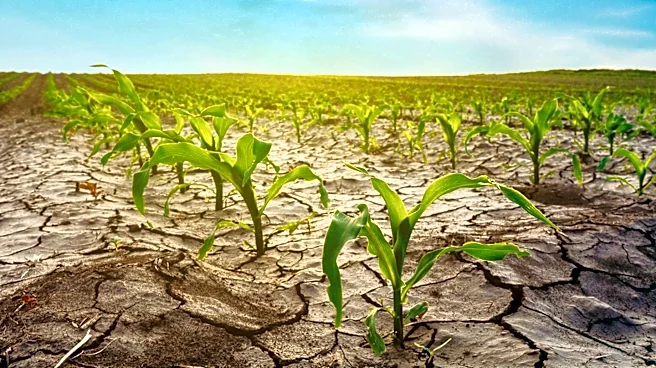
This NSF grant is significant for U.S. agriculture and food security, particularly given the increasing frequency and severity of droughts across agricultural regions. Rice and wheat are staple crops, and improving their drought tolerance can mitigate risks to food production and economic stability for farmers. The research into mycorrhizal fungi offers a sustainable and natural approach to enhancing crop resilience, potentially reducing reliance on water-intensive irrigation methods. Beyond the immediate agricultural benefits, the project fosters collaboration among multiple universities, strengthening the national research infrastructure. The inclusion of socioeconomic factors in the study, examining farmers' adoption of fungal inoculant technologies, highlights a practical approach to ensuring research outcomes translate into real-world applications. This initiative also supports the development of a skilled workforce in agricultural science, with provisions for undergraduate and graduate student training, and educational outreach.
What's Next?
Over the next four years, the research team will conduct in-depth studies combining plant biology, ecology, physiology, genomics, and field research to understand how rice and wheat respond to drought conditions when inoculated with mycorrhizal fungi. The project will also involve analyzing the socioeconomic factors influencing farmers' willingness to adopt these new fungal technologies. The findings from this multi-institutional collaboration are expected to lead to the development of practical strategies for boosting crop tolerance to water stress. Furthermore, the grant will support the training of future scientists and agricultural experts through student involvement and educational outreach programs, ensuring a pipeline of talent for addressing future agricultural challenges. The project's conclusion in July 2030 will likely see the dissemination of research findings and potential recommendations for agricultural practices.
Beyond the Headlines
The research into drought-tolerant crops, particularly through the use of natural biological agents like mycorrhizal fungi, represents a broader shift towards sustainable agricultural practices. This approach aligns with growing concerns about environmental impact and resource conservation in food production. The project's focus on understanding both the biological mechanisms and the socioeconomic factors influencing technology adoption underscores a holistic view of agricultural innovation. It acknowledges that scientific breakthroughs must be accompanied by practical and accessible implementation strategies for farmers. This initiative could set a precedent for future agricultural research, emphasizing interdisciplinary collaboration and the integration of ecological solutions to address complex challenges like climate change and food security. The long-term implications could include reduced water consumption in agriculture, enhanced biodiversity in soil ecosystems, and more resilient food systems in the face of environmental pressures.