
What's Happening?
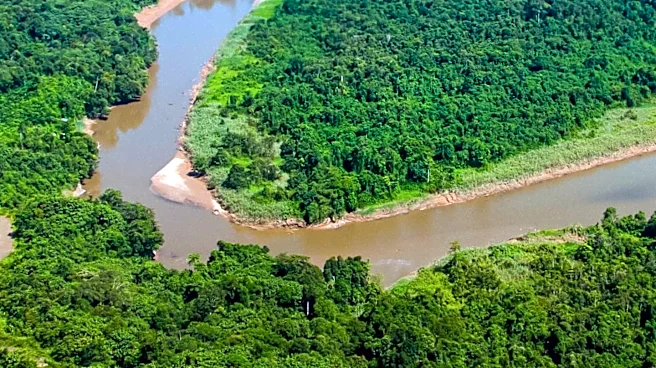
Researchers have utilized satellite mapping to uncover hidden archaeological sites in the Amazon floodplain, specifically in the Lower Amazon near Alenquer, Pará state, Brazil. The study challenges the belief
that erosion and sediment deposition have erased ancient traces in this dynamic environment. By analyzing satellite imagery, the team identified fluvial levees, elevated landforms created by river sediment deposits, which may have supported past human settlements. Fieldwork confirmed that some areas identified through satellite data corresponded to levees, with archaeological materials such as pottery and stone tools found at these sites. The research highlights the potential of combining satellite technology with local knowledge to locate and study archaeological sites in challenging environments.
Why It's Important?
This discovery is significant as it demonstrates that Amazonian floodplains, despite their dynamic nature, can preserve archaeological records. The findings provide new insights into pre-colonial human activity in the region, offering a glimpse into how ancient communities adapted to and utilized riverine environments. The study also underscores the value of integrating modern technology with traditional knowledge, as local residents played a crucial role in identifying potential sites. This approach could revolutionize archaeological research in similar environments worldwide, enabling the discovery of hidden sites and enhancing our understanding of human history and adaptation.
What's Next?
The research team plans to continue exploring the Amazon floodplain using satellite mapping and field verification to identify additional archaeological sites. Further studies will focus on understanding the settlement patterns, resource use, and cultural practices of ancient communities in the region. The integration of satellite data with geomorphology and soil analysis will be refined to improve the accuracy of site identification. This research could lead to a broader application of these methods in other dynamic landscapes, potentially uncovering new archaeological records and reshaping our understanding of human history in diverse environments.