




What's Happening?
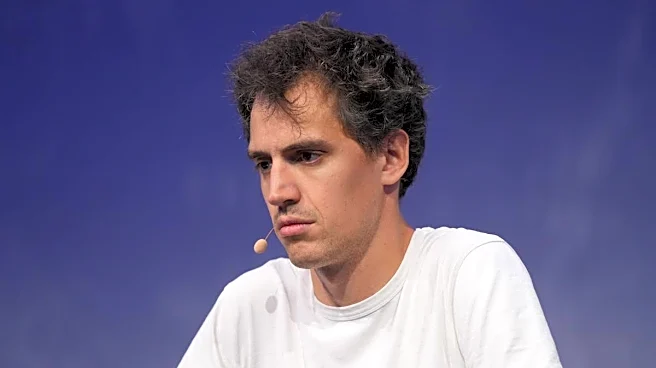
Ghost, a San Francisco-based startup founded by 19-year-old Zain Javaid, has emerged from stealth with $11 million in seed funding led by Andreessen Horowitz. The company is launching 'Core,' a $3,499 desktop computer designed to run personal AI agents.
Core is a screenless box controlled via a phone app, bundling an Nvidia GPU, local AI models (Qwen-3.8-Next, Qwen-3.8-27B, and Gemma-4-31B), and an agent firewall. The device runs its own software layer, browser, and filing system, processing information and tasks without constant user prompting. Ghost emphasizes local-first privacy, with models and personal memory running on the device, and encryption keeping data inaccessible to cloud providers or third parties. Preorders for Core opened recently, with the first batch expected to ship by the end of October.
Why It's Important?
Ghost's Core represents a significant step towards decentralized, personal AI, offering an alternative to cloud-based AI services. By running AI models locally on dedicated hardware, Core aims to provide enhanced privacy and data security, as personal information remains on the user's device. This approach could appeal to individuals and businesses concerned about data sovereignty and the potential for cloud providers to access sensitive information. The high price point of $3,499 positions Core as a premium product, targeting early adopters and users with specific privacy or performance needs. The success of Core could influence the broader AI hardware market, potentially spurring other companies to develop similar local AI solutions and accelerating the trend of 'edge AI' where processing occurs closer to the data source.
What's Next?
Ghost will begin shipping its first batch of Core units by the end of October, marking its entry into the consumer market. The company plans to push model updates over the air, similar to how Tesla updates its vehicles, allowing users to stay current with the latest AI capabilities. Key challenges for Ghost will include justifying the high price point against the capabilities of cloud-based AI and other local AI solutions, as well as building trust in its claimed privacy features and agent firewall. The company will need to demonstrate the practical utility and unique advantages of a dedicated personal AI computer to attract a wider user base. The market's reception of Core will be a crucial indicator of the demand for specialized local AI hardware.
Beyond the Headlines
The concept of a 'personal AI computer' like Core raises profound questions about the future of human-computer interaction and personal data management. If successful, it could usher in an era where AI agents deeply integrate into individuals' lives, proactively managing tasks, monitoring health, and providing personalized insights, all while theoretically maintaining privacy. However, the concentration of sensitive personal data on a single device, even with encryption and firewalls, presents new security challenges. The ethical implications of an AI agent having such intimate knowledge of a user's life, and its autonomy in making decisions or reaching out, will become increasingly important. Core's success or failure could shape the debate around centralized versus decentralized AI, influencing how future AI technologies are developed, deployed, and regulated, particularly concerning privacy, control, and the potential for AI to become an indispensable, yet deeply personal, digital companion.