









What's Happening?
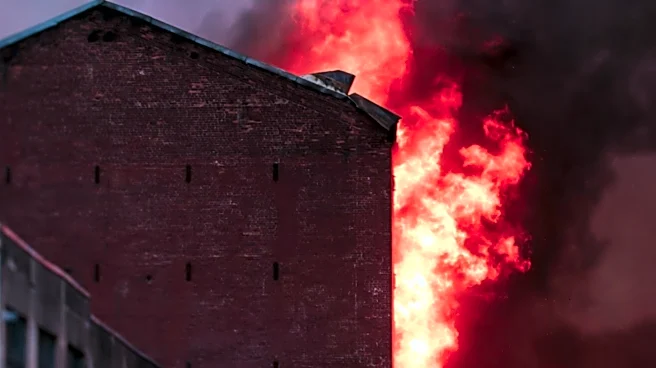
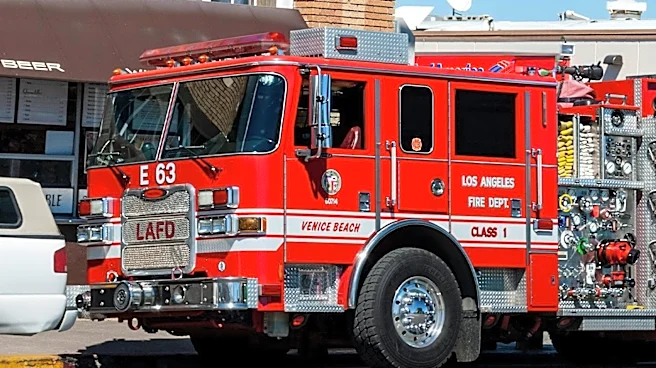
The Los Angeles Fire Department detected low levels of toxic hydrogen fluoride during a fire at a warehouse in Boyle Heights, which burned for eight days starting June 17. The fire, which involved solar panels and industrial materials, led to a significant
increase in hospital visits for smoke inhalation and throat pain. The Los Angeles County Department of Public Health reported that emergency department visits mentioning the fire or smoke inhalation tripled within a 10-mile radius of the warehouse. Despite the spike in hospital visits, there was no substantial increase in asthma or other respiratory conditions. The fire is believed to have started on the solar array of the 500,000 square-foot building, which housed 85 million pounds of frozen food. The blaze prompted two brief shelter-in-place orders for nearby residents due to the release of ammonia.
Why It's Important?
The incident highlights the potential health risks associated with industrial fires, particularly in urban areas. The release of toxic chemicals like hydrogen fluoride and the presence of fine particulate matter can pose serious health risks to local communities, especially vulnerable populations such as children and the elderly. The fire also underscores the importance of effective emergency response and public health monitoring systems to manage and mitigate the impact of such events. The involvement of the South Coast Air Quality Management District and the U.S. Environmental Protection Agency in monitoring air quality reflects the need for coordinated efforts to protect public health during industrial fires.
What's Next?
The long-term health effects of the fire and its smoke are still uncertain and may require further research to fully understand. The Los Angeles Fire Department and public health officials may continue to monitor the situation and assess the need for additional public health interventions. The incident may also prompt discussions on improving fire safety regulations and emergency response strategies for industrial facilities, particularly those involving hazardous materials.