
What's Happening?
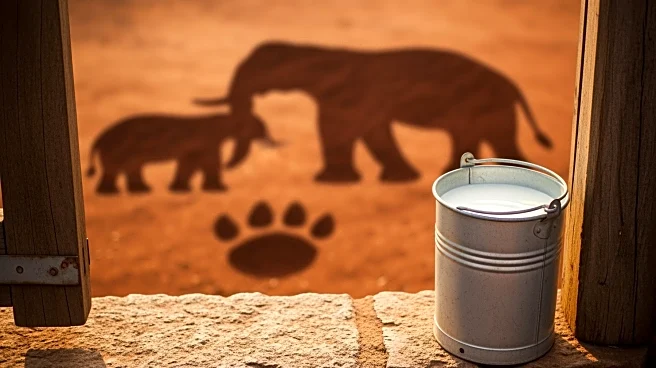
The Reteti Elephant Sanctuary in Kenya is utilizing goat's milk to feed orphaned elephants, a practice that has become a cornerstone of their conservation efforts. The sanctuary, run by the Samburu tribe,
rescues young elephants that have been separated from their families. Goat's milk, sourced from local herds, serves as a suitable substitute for elephant's milk, which is both costly and nutritionally challenging to replicate with manufactured formulas. This initiative not only supports the elephants but also empowers over 1,200 Samburu women who sell nearly 700 liters of goat's milk daily to the sanctuary. This economic activity provides these women with financial independence and contributes to local development. The sanctuary employs about 100 Samburu people and is noted for being the only elephant sanctuary in Africa entirely run by Indigenous people.
Why It's Important?
The use of goat's milk at the Reteti Elephant Sanctuary highlights a sustainable approach to wildlife conservation that also benefits local communities. By integrating local resources and labor, the sanctuary supports both environmental and economic sustainability. This model provides a blueprint for conservation efforts that prioritize community involvement and empowerment, particularly for women. The financial independence gained by the Samburu women through milk sales challenges traditional gender roles and contributes to broader social change. Additionally, the sanctuary's success in using local resources to care for wildlife could inspire similar initiatives in other regions, promoting a more holistic approach to conservation that includes human development.
What's Next?
The continued success of the Reteti Elephant Sanctuary could lead to expanded conservation efforts and increased tourism, further boosting the local economy. As the sanctuary gains recognition, it may attract more visitors and funding, which could be reinvested into community projects and conservation initiatives. The model of using local resources and labor could be replicated in other conservation areas, potentially leading to a network of community-driven wildlife sanctuaries across Africa. This approach could also influence policy decisions regarding wildlife conservation and community development, encouraging governments and NGOs to adopt similar strategies.
Beyond the Headlines
The Reteti Elephant Sanctuary's approach underscores the importance of integrating conservation with community development. By providing economic opportunities and challenging traditional gender roles, the sanctuary is fostering social change alongside environmental conservation. This dual focus on people and wildlife highlights the interconnectedness of ecological and human systems, suggesting that sustainable development requires a balance between the two. The sanctuary's success could lead to a reevaluation of conservation strategies globally, emphasizing the need for inclusive and community-based approaches.