





What's Happening?
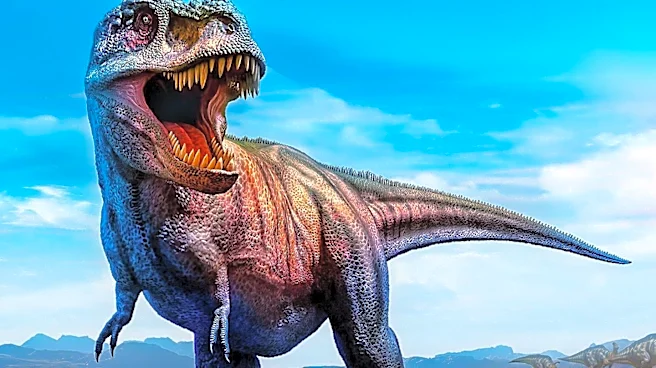
The Crystal Palace dinosaurs, a series of prehistoric sculptures in London, continue to hold scientific and historical significance. Created in the mid-19th century under the direction of Richard Owen and sculptor Benjamin Waterhouse Hawkins, these life-sized
reconstructions were the first of their kind, transforming fossil evidence into tangible representations of extinct animals. Despite being scientifically outdated, they remain a testament to the early efforts in paleontological reconstruction. The sculptures were part of a larger educational landscape designed to illustrate Earth's geological history, allowing the public to experience prehistoric life in a new way.
Why It's Important?
The Crystal Palace dinosaurs represent a pivotal moment in the history of science, marking the transition of paleontology from a specialist discipline to a public educational tool. They demonstrate the early use of comparative anatomy to reconstruct extinct animals, a method still used by modern paleontologists. These sculptures highlight the importance of public engagement in science, showing how scientific knowledge can be communicated through art and engineering. The site remains a valuable educational resource, illustrating the evolution of scientific understanding over time.