






What's Happening?
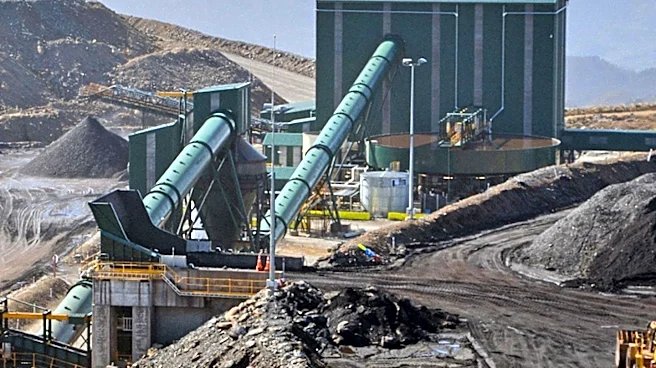
An investigation conducted by Lighthouse Reports, The Financial Times, and Le Monde has raised concerns about the potential export of uranium from the Democratic Republic of Congo (DRC) to China through cobalt shipments. The investigation is based on a confidential
memo from the International Atomic Energy Agency (IAEA) obtained in 2024, which suggests that significant quantities of uranium may be present in cobalt ores from the Katanga region. The Chinese mining group CMOC, which owns the main site in Katanga, disputes these findings. The DRC government has initiated a counter-verification process involving its nuclear safety and energy agencies, and is seeking technical support from the IAEA. The investigation also found that a refinery in Finland had received Congolese material containing uranium.
Why It's Important?
The potential export of uranium from the DRC to China raises significant international security and regulatory concerns. Uranium is a critical material for nuclear energy and weapons, and its unregulated export could have implications for global nuclear proliferation. The findings could impact international relations, particularly between the DRC, China, and other countries concerned about nuclear security. Additionally, the investigation highlights the challenges of regulating mining operations in resource-rich regions like the DRC, where oversight may be limited. The situation underscores the need for stringent monitoring and regulation of mineral exports to prevent the unauthorized transfer of nuclear materials.
What's Next?
The DRC government is expected to continue its investigation into the claims, potentially leading to increased scrutiny of mining operations in the region. The involvement of the IAEA suggests that international oversight may play a role in resolving the issue. If the findings are confirmed, there could be diplomatic repercussions for China and the DRC, as well as potential sanctions or trade restrictions. The situation may also prompt other countries to review their import practices and regulatory frameworks to prevent similar occurrences. Stakeholders in the mining industry may face increased pressure to ensure compliance with international standards.
Beyond the Headlines
The investigation highlights broader issues related to the governance of natural resources in developing countries. The DRC's mineral wealth has long been a source of both opportunity and conflict, and the potential export of uranium underscores the complexities of managing these resources responsibly. The situation also raises ethical questions about the role of multinational corporations in resource extraction and their responsibility to adhere to international norms. The findings could lead to increased calls for transparency and accountability in the mining sector, as well as greater international cooperation to address the challenges of resource management.