








What's Happening?
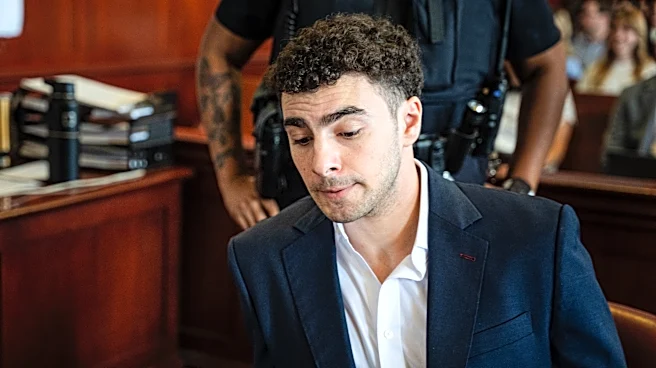
Miles Guo, a Chinese national residing in New York City, has been sentenced to 30 years in prison for orchestrating a $1.3 billion fraud scheme. Guo, who presented himself as an anti-communist activist, convinced investors to fund his ventures, which
he used to finance a lavish lifestyle, including purchasing a $37 million yacht and a $26 million mansion. Despite his conviction, Guo maintained a loyal following, with hundreds of supporters attending his sentencing. The court also ordered Guo to forfeit $889 million of his illicit gains. During the trial, it was revealed that Guo had defrauded thousands of individuals over five years, leading to significant financial losses for many victims.
Why It's Important?
The sentencing of Miles Guo highlights the extensive impact of financial fraud on individuals and the justice system's role in addressing such crimes. Guo's case underscores the vulnerability of investors to fraudulent schemes, particularly those cloaked in political or ideological rhetoric. The significant prison sentence and financial penalties imposed on Guo serve as a deterrent to similar fraudulent activities. This case also reflects the challenges faced by law enforcement in tracking and prosecuting complex financial crimes that span international borders. The outcome may influence future regulatory measures to protect investors and enhance transparency in financial dealings.
What's Next?
Following his sentencing, Guo has indicated plans to appeal the jury's verdict. This could lead to further legal proceedings and potential adjustments to his sentence. The case may prompt increased scrutiny of financial activities linked to political movements, particularly those involving international figures. Additionally, the victims of Guo's fraud may seek restitution through civil litigation, aiming to recover some of their lost investments. The broader financial community may also push for stronger regulatory frameworks to prevent similar schemes in the future.
Beyond the Headlines
Guo's case raises questions about the intersection of political activism and financial fraud. His ability to attract a large following by positioning himself as an opponent of the Chinese Communist Party suggests a complex dynamic where political narratives can be exploited for personal gain. This situation highlights the need for critical evaluation of political figures and their financial dealings, especially when they solicit public support. The case also illustrates the potential for financial fraud to undermine trust in legitimate political movements, potentially affecting their credibility and support.