






What's Happening?
A community science project named E-I-E-I-O No!, launched by three environmental nonprofits—CleanAIRE Carolina, Rural Empowerment Association for Community Help, and the N.C. Environmental Justice Network—is actively identifying and monitoring industrial
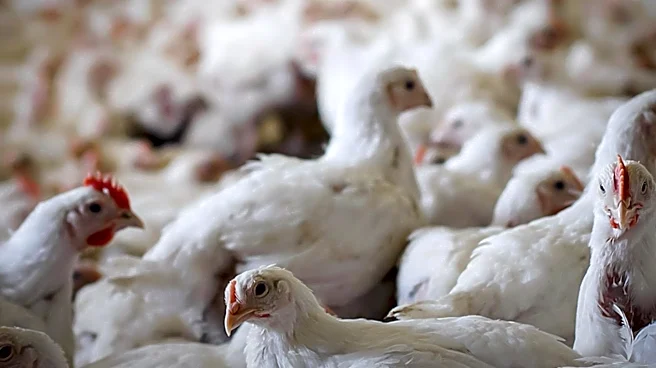
poultry concentrated animal feeding operations (CAFOs) and swine biogas projects in North Carolina. This initiative aims to publicly disclose the locations of these facilities, which state law has largely kept confidential, known only to the N.C. Department of Agriculture. The project utilizes state government satellite imagery, analyzed by over 1,600 volunteers, and verified through 'ground truthing' by driving to the sites. This effort comes in response to significant public health concerns, including foul odors and potential air and water contamination from poultry waste. In 2022, North Carolina ranked fourth in U.S. chicken production and first in turkey production, with approximately 1 billion chickens, broilers, and turkeys sold. Unlike swine CAFOs, which use waste lagoons, poultry operations mound dry feces in barns, which can then be spread on agricultural fields, leading to potential contamination of drinking water supplies.
Why It's Important?
The project is crucial for environmental justice and public health in North Carolina, as it addresses the lack of transparency surrounding industrial poultry operations. The state's legal framework, which allows many poultry CAFOs to operate without permits and keeps their locations secret, has hindered communities from understanding and addressing the environmental and health impacts of these facilities. The rapid increase in poultry operations, with some counties seeing a doubling or tripling in five years, exacerbates these concerns. By mapping these CAFOs, the project empowers residents and provides critical data for advocacy and policy changes. The potential for air and water contamination from poultry waste, including dry feces spread on fields, poses direct risks to local ecosystems and human health, particularly drinking water sources. This initiative highlights a broader national issue regarding the regulation and oversight of industrial agriculture and its impact on surrounding communities.
What's Next?
The E-I-E-I-O No! project plans to complete its analysis of all relevant counties, culminating in a comprehensive public map detailing every active poultry CAFO and the fields where their waste is spread, as well as swine lagoons equipped for biogas generation. This data will be made freely accessible, providing a vital resource for communities, researchers, and policymakers. The project's leaders anticipate that this transparency will fuel further advocacy for stricter environmental regulations and greater accountability from the industrial agriculture sector. The initiative may also inspire similar community-led efforts in other states facing comparable challenges with industrial farming operations. The release of new USDA census data on CAFOs and bird sales, expected next month, will offer additional context and potentially reinforce the findings of this community science project.
Beyond the Headlines
This community science project underscores a growing trend of citizen-led initiatives filling gaps in government oversight and data collection, particularly in areas where industries benefit from regulatory loopholes or lack of transparency. The deliberate choice by project leaders to avoid artificial intelligence in data analysis, citing AI's significant energy and water consumption and associated social and economic harms, highlights a broader ethical consideration within environmental activism. This decision aligns with the project's values of environmental justice and community engagement, emphasizing human participation over potentially resource-intensive technological solutions. The project also brings to light the evolving landscape of industrial agriculture, where a moratorium on new swine CAFOs has inadvertently led to a surge in poultry operations, shifting environmental burdens rather than resolving them. This dynamic points to the need for holistic regulatory approaches that consider the interconnectedness of different agricultural sectors and their cumulative environmental impacts.