







What's Happening?
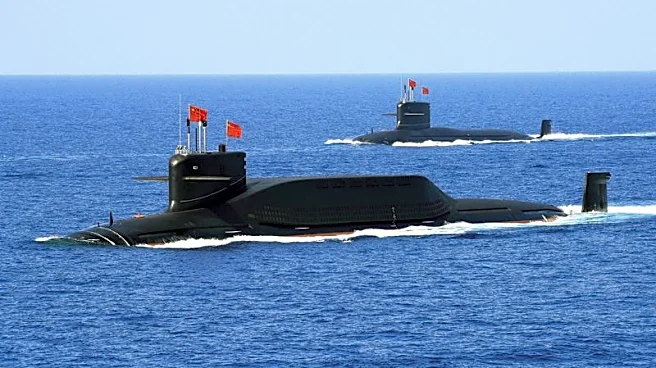
China recently conducted a submarine-fired ballistic missile test into the southern Pacific Ocean, marking a significant development in its nuclear deterrence capabilities. The test involved a missile armed with a dummy warhead and was launched from one
of China's Type-094 nuclear-powered submarines. This event has drawn criticism from regional powers, including the United States, which identified the missile as an intercontinental ballistic missile. Chinese state media described the test as a routine military drill, emphasizing that it was not directed at any specific target or country. The Chinese defense ministry stated that the test was conducted in accordance with international law and aimed at safeguarding national strategic security. Analysts note that this test is part of China's efforts to modernize its nuclear forces and maintain global strategic stability.
Why It's Important?
The test underscores China's growing capabilities in nuclear deterrence, particularly its ability to conduct operations with nuclear-armed submarines. This development is crucial for China's strategy to ensure a second-strike capability, which is vital for maintaining a credible nuclear deterrent. The ability to launch missiles from submarines enhances China's strategic flexibility and reduces the risk of its nuclear forces being neutralized in a first strike. This advancement could shift the balance of power in the region, prompting neighboring countries and the United States to reassess their security strategies. The test also highlights the ongoing military modernization efforts by China, which could lead to increased tensions and an arms race in the Asia-Pacific region.
What's Next?
As China continues to develop its nuclear capabilities, regional powers, including the United States, are likely to enhance their surveillance and tracking of Chinese submarines. This could involve increased naval patrols and the deployment of advanced maritime surveillance technologies. The international community may also call for greater transparency and dialogue to prevent misunderstandings and reduce the risk of conflict. Additionally, China's military modernization efforts may prompt other countries to bolster their own defense capabilities, potentially leading to an arms race in the region. The situation will require careful diplomatic management to ensure stability and prevent escalation.
Beyond the Headlines
The test raises questions about the strategic stability in the Asia-Pacific region and the potential for an arms race. China's advancements in submarine-launched ballistic missiles could lead to a reevaluation of nuclear deterrence strategies by other nuclear powers. The test also highlights the challenges of command and control in nuclear-armed submarines, which are critical for maintaining a credible deterrent. Furthermore, the test reflects China's broader ambitions to assert its influence and challenge the existing security architecture in the region. This development could have long-term implications for regional security dynamics and the global balance of power.