








What's Happening?
A recent study has highlighted the potential of a blood test measuring levels of phosphorylated tau 217 (p-tau217) to predict the risk of developing dementia. Conducted by researchers including Rachel Buckley, an associate professor of neurology at Harvard
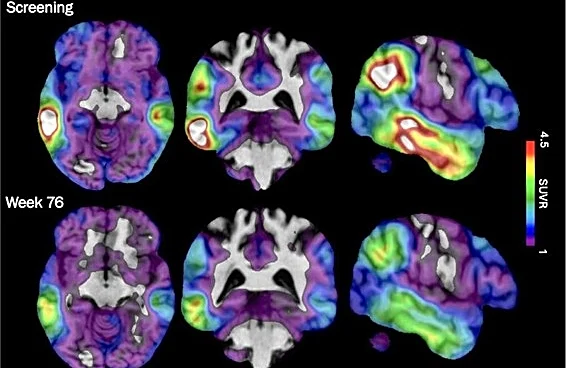
Medical School, the study found that cognitively healthy older adults with high levels of p-tau217 had a significantly increased risk of developing early signs of dementia over five to ten years. Traditionally, Alzheimer's diagnosis required invasive procedures like PET scans or spinal taps. However, the p-tau217 blood test offers a less invasive alternative by predicting the buildup of beta-amyloid plaques in the brain, which are associated with Alzheimer's. Despite the promising results, experts caution that these tests should not be used in isolation and are not yet recommended for cognitively healthy individuals.
Why It's Important?
The development of a reliable blood test for Alzheimer's could revolutionize how the disease is diagnosed and managed. By providing a less invasive and potentially more accessible method of early detection, the p-tau217 test could enable earlier interventions and personalized treatment plans. This advancement is particularly significant given the high prevalence of Alzheimer's and the growing need for effective diagnostic tools. The ability to predict dementia risk through a simple blood test could lead to more proactive healthcare strategies, potentially reducing the burden of Alzheimer's on patients, families, and healthcare systems. However, the test's current limitations and the need for further validation highlight the importance of continued research in this area.
What's Next?
Further studies are needed to validate the p-tau217 blood test across diverse populations and to establish best practices for its use in clinical settings. Researchers are also exploring how these tests can be integrated with lifestyle interventions to manage and potentially reduce the risk of Alzheimer's. As the medical community gains a better understanding of how to utilize these tests, they could become a standard part of dementia risk assessment. Meanwhile, ongoing research will focus on refining the test's accuracy and exploring its potential role in monitoring treatment responses.