








What's Happening?
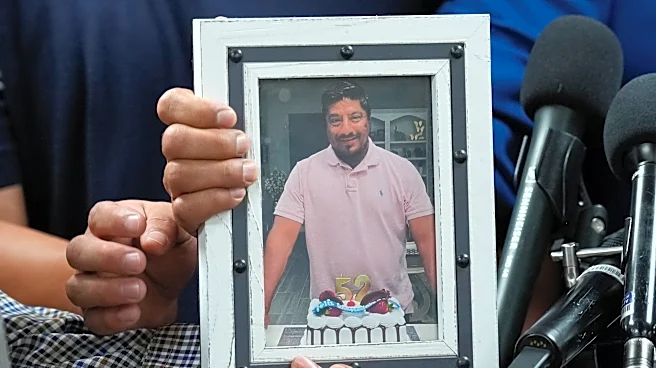
Lorenzo Salgado Araujo, a 52-year-old builder in Houston, Texas, was fatally shot by a U.S. Immigration and Customs Enforcement (ICE) officer. The incident occurred while Salgado Araujo was driving his construction crew to a job site. Federal agents,
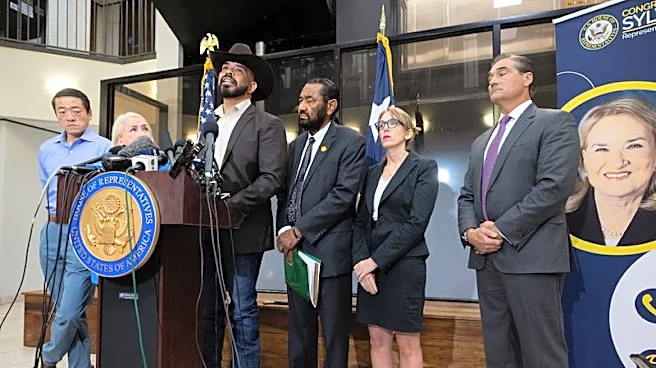
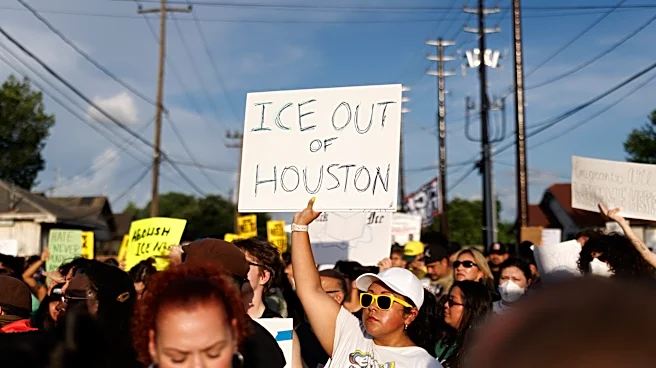
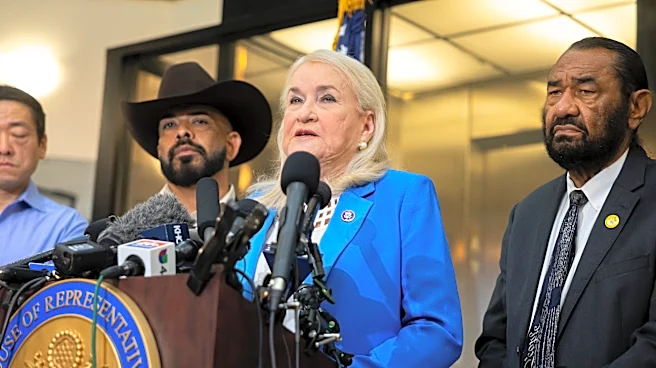
in unmarked vehicles, pursued him, leading to the shooting. ICE claims the officer fired in self-defense after Salgado Araujo allegedly rammed an ICE vehicle. However, witnesses and Salgado Araujo's family dispute this account, stating he was shot through a passenger window and that the officer was not in immediate danger. The shooting has prompted outrage among Houston leaders and renewed scrutiny of ICE's practices under President Trump's immigration policies. Four Democratic members of Congress from the Houston area have called for an independent investigation into the incident.
Why It's Important?
The shooting of Lorenzo Salgado Araujo highlights ongoing tensions and controversies surrounding ICE's enforcement tactics and President Trump's immigration policies. The incident has sparked public outcry and demands for accountability, reflecting broader concerns about the treatment of immigrants and the use of force by federal agents. The case underscores the potential human cost of aggressive immigration enforcement and raises questions about the adequacy of oversight and transparency in such operations. The call for an independent investigation suggests a push for greater scrutiny and potential policy changes to prevent similar incidents in the future.
What's Next?
In response to the shooting, local leaders and community members are likely to increase pressure on federal authorities to conduct a thorough and transparent investigation. The outcome of this investigation could influence future ICE operations and potentially lead to policy reforms aimed at improving accountability and reducing the risk of violence. Additionally, the incident may galvanize advocacy groups and lawmakers to push for broader immigration reform and enhanced protections for immigrants. The family's pursuit of justice and the community's response will be critical in shaping the narrative and potential policy outcomes.