




What's Happening?
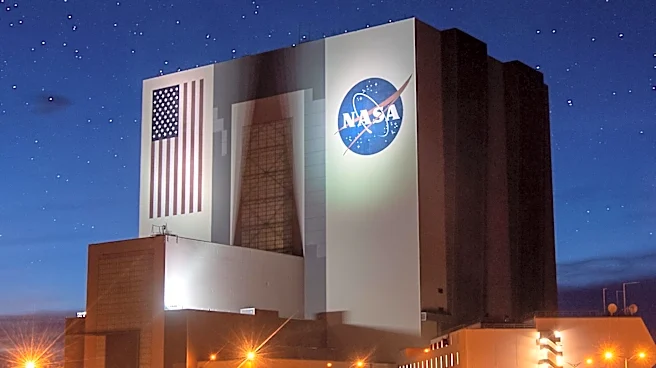
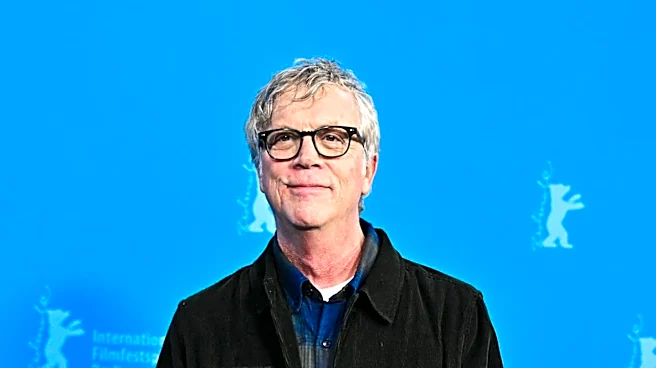
UF/IFAS Geomatics Specialist Todd Bates presented research on boundary surveying at the 2026 Florida Space Summit, held at the Kennedy Space Center. His presentation, titled 'Boundaries Without Ownership: Geomatics and Governance Beyond Earth,' focused
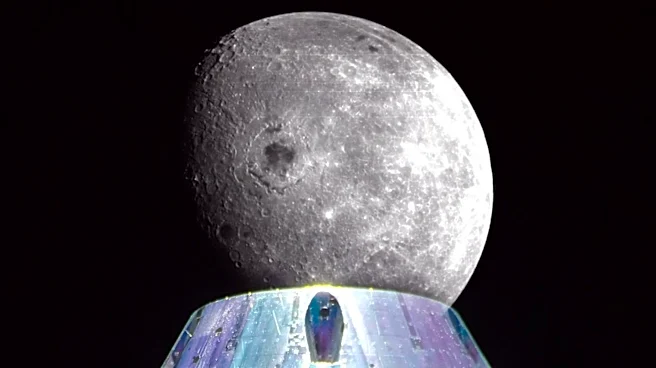
on how boundary surveying knowledge can assist mission planners, researchers, policymakers, and space operators in measuring, documenting, communicating, maintaining, and retracing temporary operational limits on the Moon and beyond Earth. Bates emphasized the importance of applying established boundary concepts like evidence, notice, and retracement to emerging questions in space governance. He highlighted the distinction between temporary operational limits for safety and coordination versus exclusionary claims of ownership, suggesting that space can serve as a laboratory for studying how spatial order develops before formal property systems exist.
Why It's Important?
Bates's work is important because it introduces a critical, often overlooked, dimension to space exploration and governance: the practical management of spatial boundaries. As lunar and extraterrestrial activities increase, the need for clear operational limits to ensure safety, prevent interference, and protect scientific and historic sites becomes paramount. While international space agreements address non-appropriation and safety zones, the implementation requires reliable spatial evidence and documentation, which geomatics professionals are uniquely equipped to provide. By bringing boundary surveying expertise to the forefront, Bates advocates for a more structured approach to managing space operations, potentially preventing future conflicts and ensuring responsible resource utilization and site preservation. This interdisciplinary contribution bridges the gap between traditional surveying practices and the complex demands of space exploration.
What's Next?
The presentation at the Florida Space Summit aims to integrate geomatics and boundary surveying into broader discussions on space exploration and governance, which are typically led by law, policy, engineering, and planetary science experts. The goal is to foster interdisciplinary collaborations that will lead to the development of practical frameworks for spatial order in space. As activity on the Moon and beyond Earth expands, there will be a growing need for professionals who can evaluate evidence, document decisions, communicate limits, preserve records, and retrace earlier work in extraterrestrial environments. This research could influence how future space missions are coordinated, how lunar mapping is conducted, and how sites are preserved, ultimately contributing to the establishment of robust spatial governance systems beyond Earth.
Beyond the Headlines
Bates's research delves into the fundamental concept of 'boundaries without ownership,' challenging traditional notions of property rights in the context of space. This raises profound ethical and legal questions about how humanity will manage shared resources and operational zones in an environment where national appropriation is prohibited. The work suggests that the principles of boundary surveying, developed over centuries on Earth, can offer a pragmatic model for establishing order in a new frontier. Culturally, it highlights the often-unseen but crucial role of specialized technical fields in enabling grand scientific and exploratory endeavors. This perspective could lead to new academic disciplines focusing on extraterrestrial spatial governance and the development of international standards for documenting and managing activities in space, ensuring a more peaceful and organized expansion of human presence beyond Earth.