






What's Happening?
Archaeologists have discovered ancient tools in Southeast Asia that suggest early humans were capable of seafaring tens of thousands of years earlier than previously thought. The tools, found in the Philippines, Indonesia, and Timor-Leste, indicate that humans were crossing
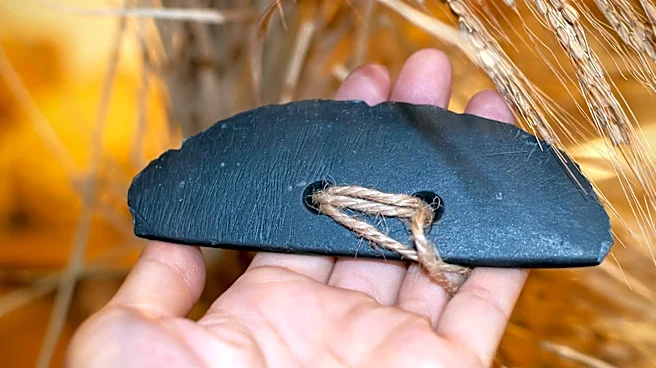
open oceans deliberately, using advanced maritime technology. This challenges the prevailing theory that early human migration in the region was accidental. The findings include stone tools with wear patterns consistent with plant processing, suggesting the production of ropes and bindings necessary for boatbuilding and fishing. These discoveries point to a sophisticated maritime culture in the region.
Why It's Important?
This discovery reshapes our understanding of early human migration and technological capabilities. It suggests that Southeast Asia was a center of innovation, with early humans developing seafaring skills long before similar advancements in other regions. This challenges the Eurocentric view of technological progress and highlights the diversity of human ingenuity across different cultures. The findings also have implications for the study of human evolution, as they provide new insights into the adaptability and resourcefulness of early humans in navigating and settling diverse environments.
Beyond the Headlines
The implications of this discovery extend to the broader narrative of human history, prompting a reevaluation of the role of maritime technology in early human societies. It raises questions about the social and cultural dynamics that enabled such advancements, suggesting a level of organization and knowledge sharing among early communities. The findings also highlight the importance of interdisciplinary research in uncovering hidden aspects of the past, as archaeologists, geneticists, and other scientists collaborate to piece together the complex puzzle of human history.