





What's Happening?
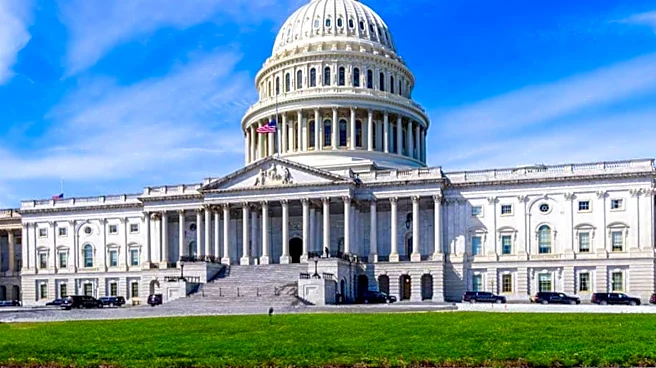
The U.S. House of Representatives has passed a bill that combines measures to curb stock trading by members of Congress with new voter ID requirements. The legislation, which passed with a vote of 232-198, includes provisions to prohibit members of Congress and
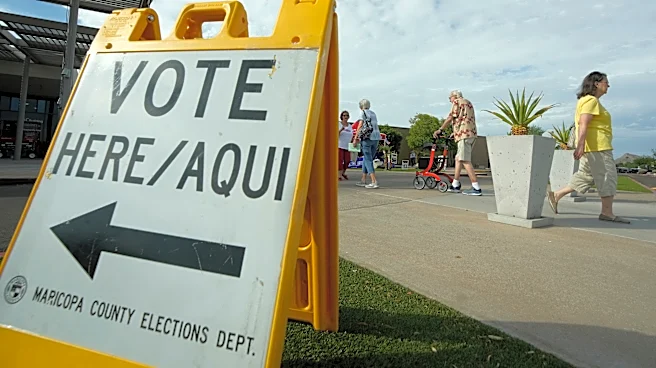
their families from engaging in certain stock transactions and mandates public notice before selling stocks. Additionally, the bill requires voters to present specific forms of identification to vote, such as a state-issued ID or passport. The voter ID component has sparked debate, with Democrats criticizing the removal of a state grant provision that would have helped cover the cost of obtaining IDs. The bill now faces challenges in the Senate, where it requires 60 votes to pass.
Why It's Important?
This legislative package is significant as it addresses two contentious issues: insider trading by lawmakers and voter ID laws. The stock trading restrictions aim to enhance transparency and reduce conflicts of interest among federal lawmakers, responding to public concerns about ethical standards in Congress. Meanwhile, the voter ID requirements have sparked controversy, with critics arguing they could suppress voter turnout by imposing additional barriers. The bill reflects ongoing debates about election integrity and the balance between security and accessibility in voting. Its outcome could influence future legislative efforts on these issues and impact public trust in government institutions.
What's Next?
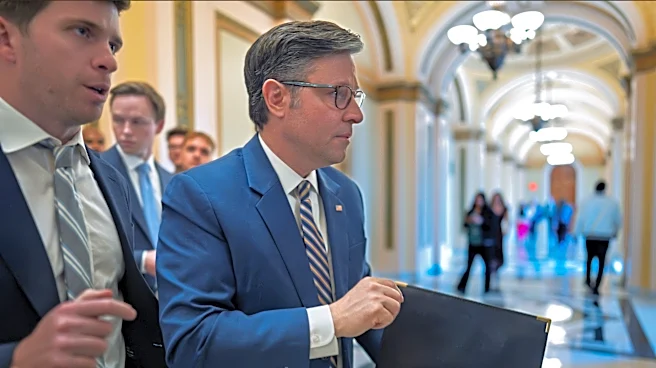
The bill's future in the Senate is uncertain, as it requires bipartisan support to overcome the 60-vote threshold. Senate Majority Leader John Thune has indicated that there may not be enough votes to pass the bill in its current form. If the Senate does not pass the bill, it could lead to further negotiations and potential revisions. The debate over voter ID laws and stock trading restrictions is likely to continue, with both sides advocating for their positions. The outcome could have implications for upcoming elections and the ethical standards expected of public officials.