






What's Happening?
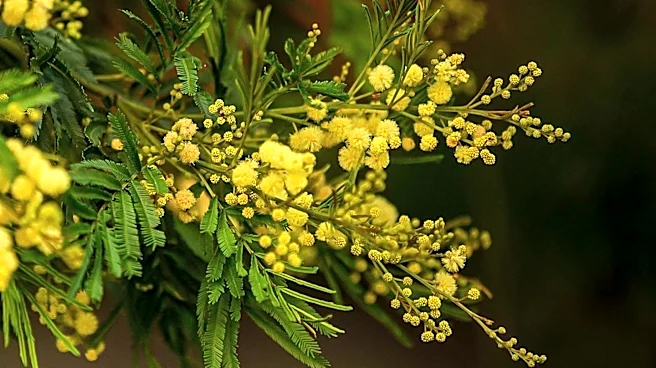
Introduced to the United States around 1745 for its attractive pink flowers and unique foliage, the mimosa tree (Albizia julibrissin) has since escaped cultivation and become an invasive species across parts of the southern and eastern U.S. Initially
prized as an ornamental, its ability to reproduce rapidly, spread seeds widely, and resprout after cutting has allowed it to establish itself in disturbed areas like roadsides, clearings, and floodplains. This aggressive growth allows mimosa to outcompete native trees and shrubs, altering habitats along forest edges and waterways. The tree's resilience, including its ability to tolerate various soil and light conditions and for its seeds to remain dormant for years, makes its control challenging. Extension services now recommend native alternatives such as serviceberry, flowering dogwood, and eastern redbud for landscaping.
Why It's Important?
The spread of the mimosa tree as an invasive species has significant ecological and economic implications for the U.S. environment. Ecologically, it disrupts native ecosystems by displacing indigenous plant species, reducing biodiversity, and altering natural habitats, particularly along riparian areas and forest edges. This can negatively impact local wildlife that depend on native flora for food and shelter. Economically, managing mimosa infestations requires substantial resources, including repeated cutting, herbicide treatments, and long-term monitoring, placing a burden on land managers and property owners. The situation highlights the long-term consequences of introducing non-native species, even those initially considered harmless or beneficial, and underscores the importance of careful consideration in landscaping choices to prevent future ecological damage.
What's Next?
Efforts to control the spread of mimosa trees will likely continue through various land management strategies, including mechanical removal, girdling, and targeted herbicide applications. Public awareness campaigns by extension services and environmental organizations are expected to educate homeowners and landscapers about the risks of planting mimosa and promote native alternatives. Research into more effective and environmentally friendly control methods may also be pursued. The long dormancy period of mimosa seeds means that even after initial removal, ongoing monitoring and maintenance will be necessary to prevent re-establishment. This ongoing challenge will require sustained commitment from government agencies, environmental groups, and individual landowners to mitigate the ecological impact of this invasive species.
Beyond the Headlines
The story of the mimosa tree serves as a powerful case study in the broader issue of invasive species and the unintended consequences of human intervention in natural ecosystems. It underscores the ethical responsibility associated with introducing non-native plants and the need for a precautionary approach in horticulture and agriculture. This situation also reflects a cultural shift in environmental consciousness, moving from an appreciation of exotic beauty to a greater emphasis on ecological balance and native biodiversity. The long-term implications extend to the resilience of ecosystems in the face of climate change, as invasive species can further destabilize environments already under stress. It highlights the complex interplay between human aesthetic preferences, ecological science, and environmental policy in shaping the natural landscape.