

What's Happening?
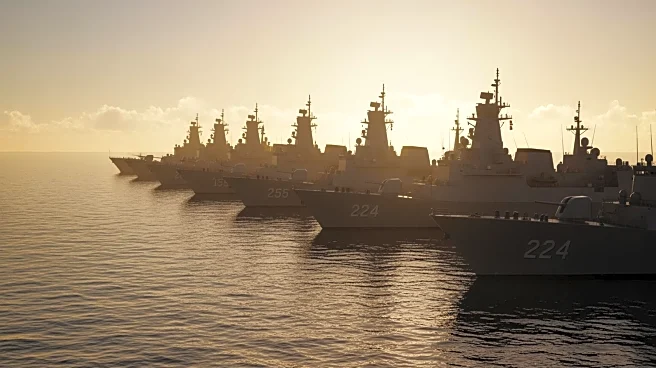
India recently hosted the International Fleet Review (IFR) 2026 off the coast of Visakhapatnam, showcasing its expanding naval capabilities. The event, attended by 74 countries including the United States, was part of a series of maritime gatherings aimed
at positioning India as a central maritime power in the Indo-Pacific region. The review featured nearly 100 vessels, including aircraft carriers, destroyers, and submarines, highlighting India's growing maritime partnerships. The event was presided over by India's President Droupadi Murmu and attended by key Indian officials. The IFR was primarily ceremonial, intended to project goodwill among participating navies, but also carried strategic significance as a demonstration of India's naval self-reliance and modernization efforts.
Why It's Important?
The International Fleet Review underscores India's strategic ambitions in the Indo-Pacific, a region marked by increasing geopolitical tensions and competition. By showcasing its naval capabilities, India aims to assert its influence and foster maritime cooperation with other nations, including the United States. This event is significant for U.S. interests as it aligns with broader efforts to counterbalance China's growing presence in the region. The participation of the U.S. Navy in the review highlights the importance of India-U.S. maritime collaboration in maintaining regional stability and security. Additionally, India's push for naval self-reliance reflects its broader defense strategy to reduce dependence on foreign suppliers, which could impact global defense markets and alliances.
What's Next?
Following the International Fleet Review, India is expected to continue strengthening its naval capabilities and expanding its maritime partnerships. The upcoming multilateral MILAN 2026 naval exercise and the Indian Ocean Naval Symposium (IONS) Conclave of Chiefs will further enhance India's role as a key player in regional maritime security. The U.S. and other participating countries may seek to deepen their naval cooperation with India, focusing on joint exercises, technology sharing, and strategic dialogues. These developments could lead to increased collaboration on addressing common maritime challenges such as piracy, terrorism, and disruptions to global supply chains.
Beyond the Headlines
India's naval modernization and self-reliance efforts are part of a broader national strategy to achieve defense self-sufficiency by 2047, the centenary of Indian independence. This initiative, driven by Prime Minister Narendra Modi's vision, aims to reduce India's reliance on foreign defense suppliers and enhance its indigenous defense manufacturing capabilities. However, challenges remain, as India's navy continues to operate a diverse mix of systems from various countries, posing logistical and maintenance hurdles. The success of India's naval strategy will depend on its ability to integrate these systems and maintain operational readiness while fostering international maritime cooperation.