
What's Happening?
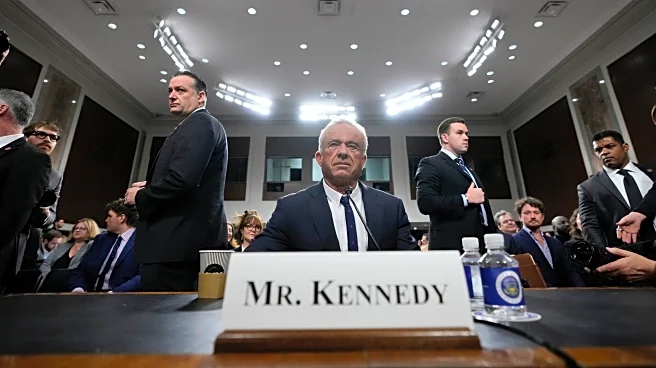
In 2025, under the leadership of Health and Human Services Secretary Robert F. Kennedy Jr., the U.S. health policy has undergone significant changes. Since taking office in February, Kennedy has implemented
a series of controversial reforms, including the elimination of thousands of jobs and the freezing or cancellation of billions of dollars in scientific research funding. His approach has been characterized by a departure from established medical consensus, particularly in areas such as vaccines, where he has promoted discredited theories. Kennedy's policies have been part of his 'Make America Healthy Again' (MAHA) movement, which aims to address chronic diseases and promote healthy living. While some of his initiatives, like efforts to lower drug prices and encourage healthy eating, have received bipartisan support, his overall approach has raised concerns among public health experts about the potential long-term impact on the nation's scientific leadership.
Why It's Important?
The changes led by Kennedy have significant implications for the U.S. health system. By reshaping the Department of Health and Human Services, Kennedy is challenging long-standing public health practices and scientific norms. His actions could undermine the credibility of U.S. health agencies and affect the country's ability to respond to public health challenges. The reduction in scientific research funding and the dismissal of key health officials may weaken the nation's capacity for innovation and evidence-based policy-making. Additionally, Kennedy's stance on vaccines and other health issues could influence public perceptions and behaviors, potentially leading to lower vaccination rates and increased health risks. The broader impact of these policies on public health, scientific research, and healthcare access remains a critical concern for stakeholders across the political spectrum.
What's Next?
As Kennedy continues to implement his health policy agenda, the U.S. health system faces ongoing uncertainties. The potential expiration of Affordable Care Act subsidies and Medicaid cuts could jeopardize insurance coverage for millions of Americans. The legal challenges to Kennedy's restructuring efforts may also shape the future of the Department of Health and Human Services. Stakeholders, including political leaders, healthcare providers, and public health experts, are likely to continue debating the implications of Kennedy's policies. The administration's approach to health policy will be closely watched as it navigates these challenges and seeks to balance innovation with scientific integrity.
Beyond the Headlines
Kennedy's health policy reforms highlight broader ethical and cultural debates about the role of government in public health. His emphasis on personal responsibility and skepticism of established medical practices reflects a shift towards individualism in health policy. This approach raises questions about the balance between personal choice and public health protection. The MAHA movement's focus on lifestyle changes and environmental factors also underscores the growing interest in holistic health approaches. However, the potential risks associated with promoting unproven health claims and reducing scientific oversight could have long-term consequences for public trust in health institutions.