







What's Happening?
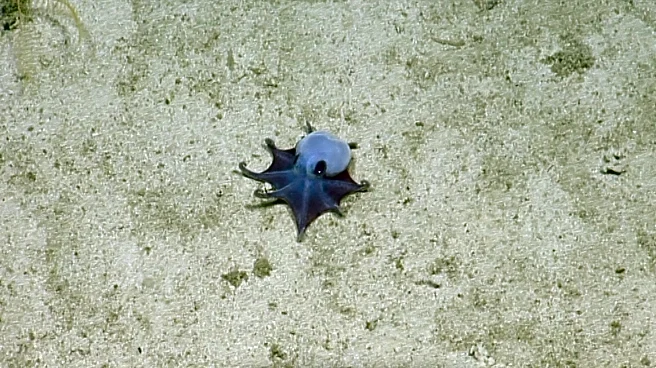
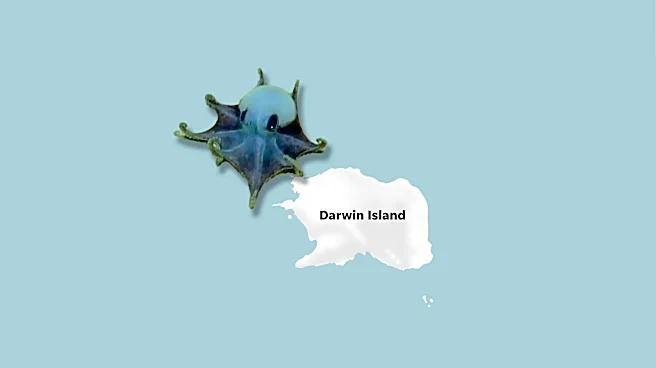
A team of scientists from the Charles Darwin Foundation has discovered a new species of blue octopus approximately 5,900 feet underwater near the Galapagos Islands. The octopus, named Microeledone galapagensis, was first sighted in 2015 near Darwin Island.
This discovery was led by octopus expert Janet Voight, who has been studying octopus evolution for four decades. The octopus is notable for its small size, unique blue hue, and distinct physical characteristics, such as stubby arms with a single row of suckers. The research, published in the journal Zootaxa, highlights the octopus's adaptation to its deep-sea environment, including its coloration, which may help it avoid predators.
Why It's Important?
The discovery of Microeledone galapagensis underscores the rich biodiversity of the Galapagos region and the vast unexplored areas of the ocean. This finding contributes to the understanding of marine life and the evolutionary processes that occur in isolated environments. The research also emphasizes the importance of conservation efforts to protect these unique species and their habitats. The study of such rare species can provide insights into the ecological roles they play and how they adapt to changing environmental conditions, which is crucial for developing strategies to preserve marine ecosystems.
What's Next?
Further research is likely to focus on the ecological role of Microeledone galapagensis and its interactions with other marine species. Scientists may also explore other unexplored regions of the ocean to discover additional new species. Conservationists and policymakers could use this information to advocate for increased protection of marine environments, particularly in biodiversity hotspots like the Galapagos Islands. Continued exploration and study of deep-sea ecosystems are essential for understanding the full extent of marine biodiversity and the impacts of human activities on these environments.
Beyond the Headlines
The discovery of a new octopus species highlights the ongoing evolution of marine life and the potential for finding more undiscovered species in the ocean's depths. This finding also raises questions about the impact of climate change and human activities on deep-sea ecosystems. As scientists continue to explore these environments, they may uncover new information about the resilience and adaptability of marine species, which could inform conservation strategies and policy decisions. The study of such unique species also contributes to the broader understanding of evolutionary biology and the interconnectedness of life on Earth.