

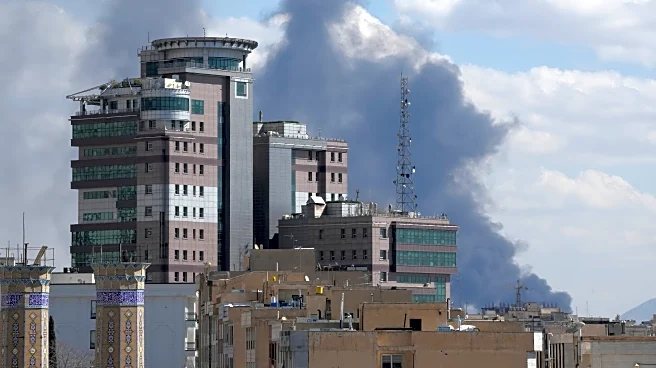
What's Happening?
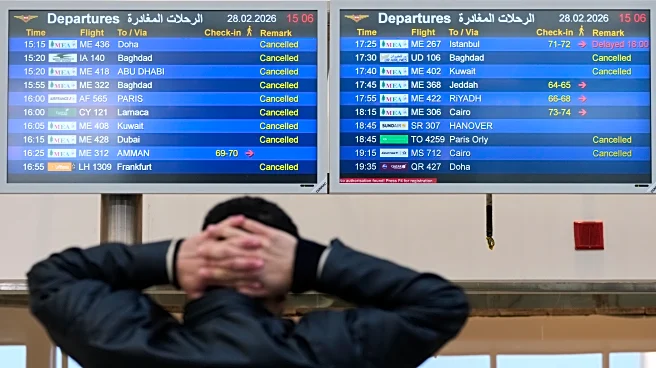
The U.S. State Department has issued a directive urging Americans to leave over a dozen Middle Eastern countries due to escalating safety risks from the ongoing conflict involving Iran. This advisory comes as major airlines have canceled flights and airspace
across the Gulf region has been closed, leaving tens of thousands of people, including tourists and diplomats' families, stranded. The U.S. has also evacuated nonemergency personnel and families from six nations, including the United Arab Emirates, which has been affected by the conflict. The situation has prompted a global response, with countries like Russia, Italy, Germany, and France organizing repatriation flights to bring their citizens home.
Why It's Important?
The directive from the U.S. State Department highlights the severe impact of the Iran conflict on international travel and safety. The closure of airspace and cancellation of flights have disrupted travel plans for thousands, affecting not only tourists but also diplomatic and business operations in the region. The situation underscores the broader geopolitical tensions and their potential to destabilize the region further. For the U.S., ensuring the safety of its citizens abroad is a priority, and the evacuation efforts reflect the seriousness of the threat posed by the conflict. The economic implications are significant, as the disruption affects tourism and international business activities in the Middle East.
What's Next?
As the situation develops, further diplomatic efforts may be necessary to de-escalate tensions and restore stability in the region. The U.S. and other countries will likely continue to monitor the situation closely, potentially adjusting travel advisories and evacuation plans as needed. The conflict's progression could influence international relations and economic policies, particularly concerning energy markets and regional security alliances. Stakeholders, including governments and international organizations, may need to engage in dialogue to address the underlying issues contributing to the conflict.