





What's Happening?
Israeli security officials have expressed concerns over Hamas exploiting a governance vacuum in Gaza to regain power, as the Israeli Defense Forces (IDF) focus on the northern front in Lebanon. The officials predict that the Israeli government will oppose
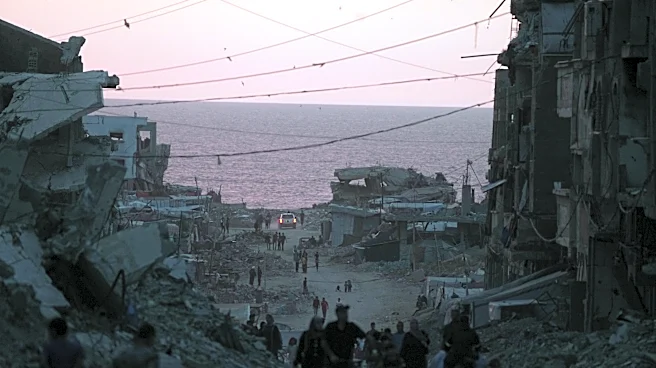
the Palestinian technocratic government's initiatives in Gaza, fearing Hamas will re-establish control over key areas. The 'Rafah First' initiative, aimed at transforming Rafah into a demilitarized zone, is part of efforts to rehabilitate the area. However, challenges persist as Hamas is reportedly resistant to demilitarization, complicating U.S. efforts to apply pressure. The situation remains tense, with strategic deadlocks hindering progress.
Why It's Important?
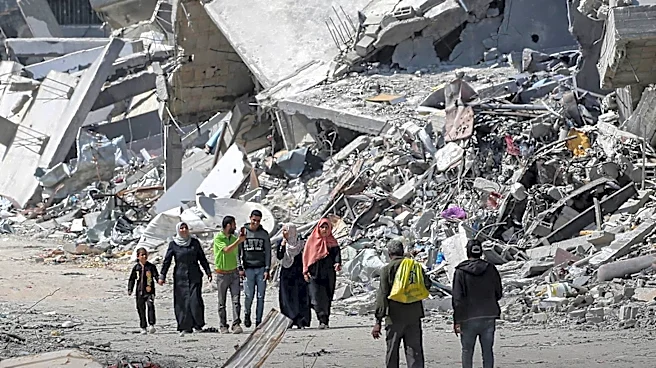
The potential resurgence of Hamas in Gaza poses significant security challenges for Israel and complicates international diplomatic efforts in the region. The situation affects U.S. foreign policy, as the U.S. seeks to balance support for Israel with efforts to stabilize Gaza. The reconstruction of Rafah is crucial for improving living conditions and reducing tensions, but the presence of Hamas complicates these efforts. The outcome of this situation could impact regional stability, influence U.S.-Israel relations, and affect broader Middle Eastern geopolitics, particularly if Hamas strengthens its position.
What's Next?
The Israeli government is likely to continue opposing initiatives that could empower Hamas, while international stakeholders, including the U.S., may seek alternative strategies to facilitate Gaza's reconstruction. The situation may lead to increased diplomatic efforts to negotiate a resolution that addresses security concerns while promoting humanitarian aid. Monitoring the developments in Rafah and the broader Gaza Strip will be crucial for understanding the evolving power dynamics and potential shifts in regional alliances.