



What's Happening?
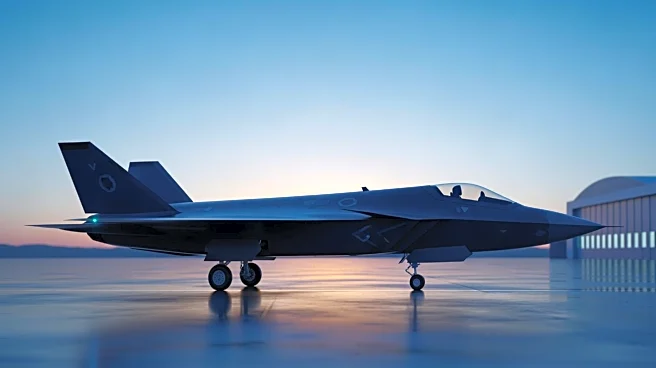
The US Air Force's 'wild weasel' squadron stationed at Misawa Air Base in Japan has begun transitioning from F-16CM fighter jets to the more advanced F-35A stealth fighters. This transition is part of a broader effort to modernize the US military's capabilities
in Asia, particularly in the suppression of enemy air defenses (SEAD) mission. The F-35A aircraft, which arrived on March 28, 2026, are equipped with advanced sensors and stealth capabilities, making them well-suited for penetrating radar-guarded airspace and targeting enemy defenses. The move is intended to bolster the US-Japan alliance and enhance regional security.
Why It's Important?
The transition to F-35A fighters represents a significant upgrade in the US military's ability to conduct SEAD missions, which are crucial for maintaining air superiority in contested environments. The F-35's advanced technology and stealth capabilities provide a strategic advantage, allowing the US to effectively counter potential threats in the Asia-Pacific region. This move also strengthens the US-Japan alliance, as both countries work together to deter aggression and ensure regional stability. The permanent stationing of these aircraft in Japan underscores the US commitment to its allies and its strategic interests in the region.
What's Next?
As the transition to F-35A fighters continues, the US Air Force will likely conduct training exercises to integrate the new aircraft into its operations. The deployment of additional F-35s and other advanced aircraft, such as the Boeing F-15EX, is expected to further enhance the US military's capabilities in the region. The ongoing modernization efforts may also prompt other countries in the region to upgrade their own defense systems, potentially leading to an arms race. Diplomatic efforts will be crucial in managing regional tensions and preventing escalation.