

What's Happening?
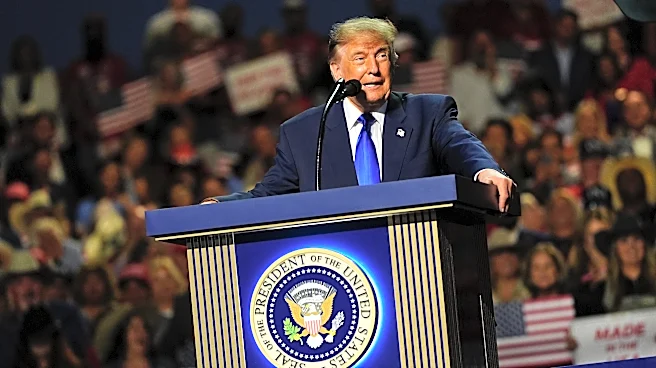
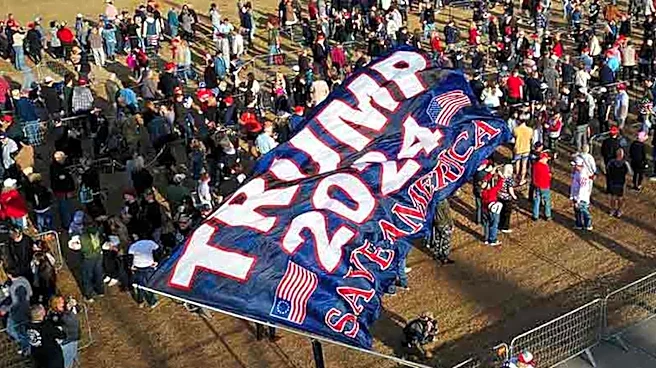
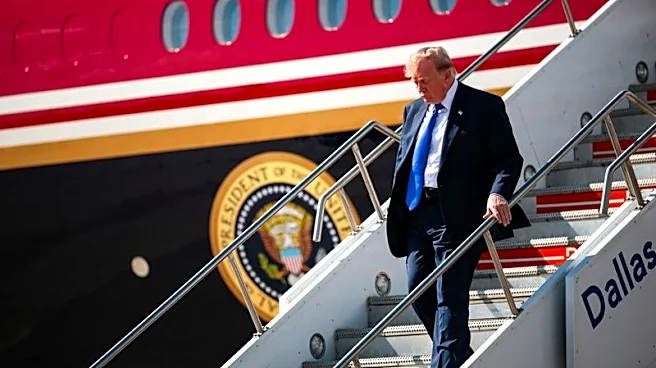
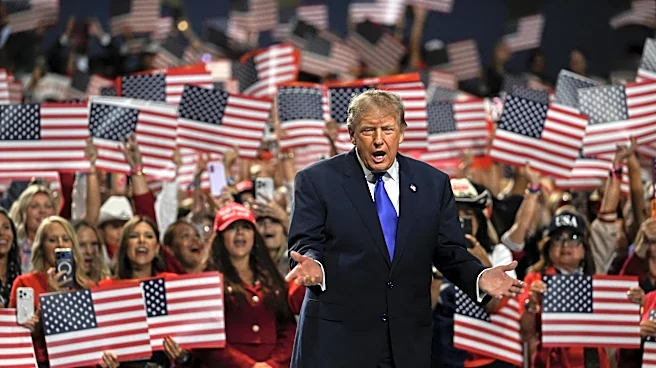
President Trump recently hosted a two-day 'convention' where he was the keynote speaker on both nights. During his speeches, which included boasting about crowd size, mocking political figures, and highlighting his administration's achievements such as driving
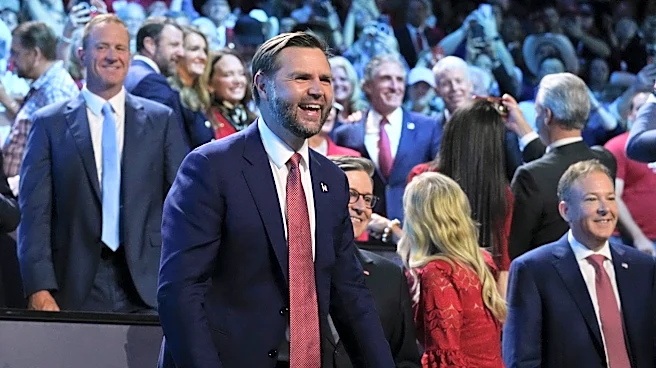
up the stock market, banning diversity initiatives, and preventing the 'mutilization' of transgender children, he also urged attendees to vote in the upcoming November midterm elections. The event featured prominent Republican figures, including House Speaker Mike Johnson and Vice President JD Vance, as well as various Republican candidates in competitive races. These participants aligned themselves closely with President Trump, whose approval ratings are currently at a historic low. The convention concluded with President Trump receiving applause as balloons fell and an opera singer performed.
Why It's Important?
This event is significant because it explicitly tied numerous Republican candidates to President Trump, whose current approval ratings are low and whose administration has been associated with an unpopular war and rising costs of living for Americans. By having prominent GOP leaders and candidates participate and align themselves with President Trump, the convention may have inadvertently exacerbated the challenges Republicans face in the upcoming midterm elections. The strategy of linking candidates to a president with sagging popularity could make an already difficult election cycle even more challenging for the Republican Party, potentially impacting their performance in competitive races across the country. This alignment could influence voter perception and turnout, especially among those disaffected by President Trump's policies or public image.
What's Next?
The immediate aftermath of the convention will likely see political analysts and campaigns assessing its impact on voter sentiment and the Republican Party's prospects in the November midterms. Republican candidates who participated may face increased scrutiny regarding their alignment with President Trump's policies and public statements. The Democratic Party will likely leverage the convention's messaging and President Trump's low approval ratings in their campaign efforts, aiming to draw a clear contrast between their platform and that of the Republicans. The coming weeks will reveal whether this strategy of close association with President Trump will energize his base sufficiently to overcome broader public dissatisfaction or if it will further hinder Republican efforts to gain or maintain seats in Congress.
Beyond the Headlines
Beyond the immediate electoral implications, this event highlights a deeper trend within the Republican Party: the continued central role of President Trump in its political identity and strategy. Despite his fluctuating popularity, his influence remains a dominant force, compelling candidates and party leaders to align with him. This dynamic raises questions about the long-term evolution of the Republican Party, its ability to appeal to a broader electorate, and the potential for internal divisions as it navigates future elections. The convention also underscores the ongoing cultural and political polarization in the U.S., where issues like transgender rights and diversity initiatives become focal points in broader political campaigns, reflecting deeper societal debates.