






What's Happening?
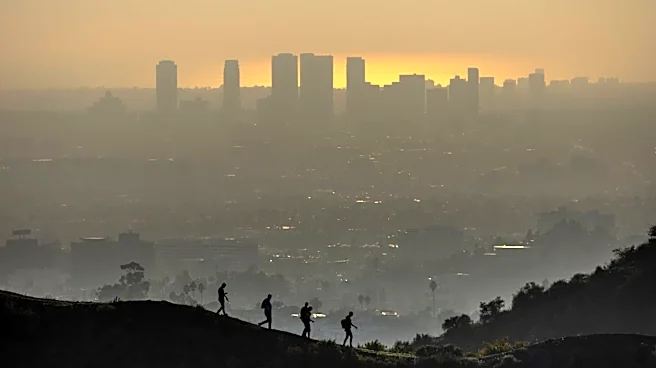
Southern California has experienced its smoggiest first five months of the year in over a decade, with 39 days of unhealthful air quality due to high ozone levels. The South Coast air basin, which includes Los Angeles, Orange, Riverside, and San Bernardino
counties, has been particularly affected. The region's millions of gas-powered vehicles and the area's geography, which traps pollution, contribute to the smog problem. Despite efforts to reduce emissions over the past decades, the area still struggles to meet federal air quality standards for ozone.
Why It's Important?
The increase in smog days poses significant health risks to the 18 million residents in the affected areas, exacerbating respiratory issues and potentially leading to more hospital visits. This situation highlights the ongoing challenges in managing air quality in densely populated regions with high vehicle emissions. The early onset of smoggy conditions this year serves as a warning of potentially worsening air quality, emphasizing the need for continued regulatory efforts and innovations in reducing emissions. The situation also underscores the importance of transitioning to cleaner energy sources and transportation options to protect public health and the environment.
What's Next?
Local air quality officials are urging residents to monitor pollution levels and limit outdoor activities during high smog days. There is a call for increased incentives to transition to zero-emission vehicles and appliances. The situation may prompt further regulatory actions to address the root causes of pollution, including stricter emissions standards and support for renewable energy initiatives. The ongoing dialogue between residents, environmental groups, and regulators will be crucial in shaping future policies aimed at improving air quality in Southern California.