




What's Happening?
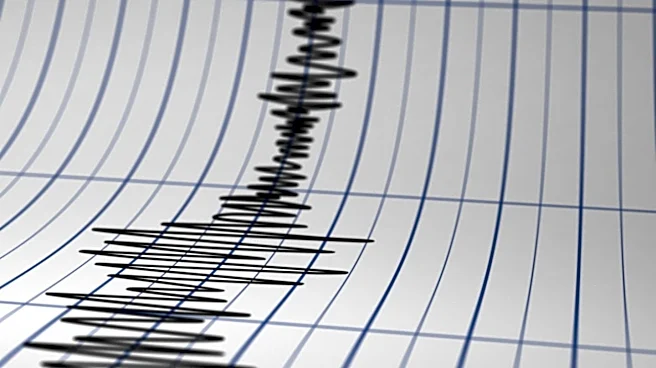
Nevada recently experienced two rapid-fire earthquakes, measuring magnitudes 3.6 and 3.5, near Preston. These tremors occurred within seconds of each other in a region known as the Basin and Range Province, where the Earth's crust is gradually stretching
and thinning. The US Geological Survey (USGS) recorded these events, noting that while earthquakes of this magnitude are often felt, they typically cause only minor damage. No damage has been reported from these specific quakes. The Basin and Range Province, which spans much of the western U.S., is characterized by frequent faulting and seismic activity due to the ongoing geological processes of crustal extension. This area has a history of significant seismic events, including a 6.5-magnitude earthquake in 2020, also attributed to the Basin and Range Province's geological dynamics. Nevada is the third most seismically active state in the U.S., behind Alaska and California, with small earthquakes occurring daily.
Why It's Important?
The occurrence of these rapid-fire earthquakes in Nevada highlights the continuous geological activity within the Basin and Range Province, a vast area covering over 300,000 square miles across several western U.S. states. This region's unique geological structure, where the Earth's crust is pulling apart, leads to the formation of faults and subsequent seismic events. While the recent quakes were minor, they serve as a reminder of the potential for more significant seismic activity in the area. The ongoing stretching and thinning of the crust can reshape the landscape over millions of years, creating valleys and mountain ranges. For residents and infrastructure in Nevada and surrounding states, understanding this seismic environment is crucial for preparedness and construction standards, even though a series of small earthquakes does not necessarily predict a larger one.
What's Next?
Geologists and seismic monitoring agencies will continue to observe the activity in the Basin and Range Province. While the USGS notes that clusters of small earthquakes do not always precede larger events, ongoing monitoring is essential for understanding seismic patterns. Residents in seismically active areas like Nevada are encouraged to be aware of earthquake preparedness measures. The continuous geological processes in the Basin and Range Province mean that seismic activity will remain a regular feature of the region. Further research into the specific fault lines and stress accumulations could provide more insights into future earthquake potential, though predicting exact occurrences remains challenging.
Beyond the Headlines
The geological processes at play in the Basin and Range Province offer a profound insight into the Earth's dynamic nature. The slow but powerful forces of crustal extension are not just a scientific curiosity but have tangible impacts on the landscape and human habitation. The continuous reshaping of the land, with some blocks sinking to form valleys and others tilting to create mountains, illustrates the long-term geological evolution of the western U.S. This ongoing transformation also raises questions about long-term urban planning, infrastructure resilience, and the integration of geological understanding into public policy in regions prone to such natural phenomena. The distinction between minor tremors and potentially destructive events underscores the need for both scientific vigilance and public education.