





What's Happening?
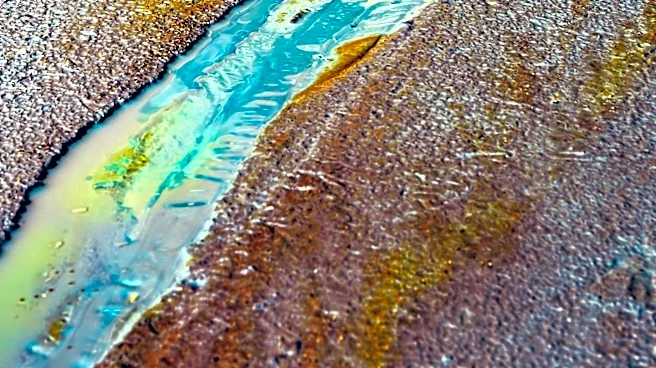
An investigation has revealed that groundwater beneath the Aughinish Alumina refinery in Co Limerick contains contaminants far exceeding legal thresholds. The Irish Times reports that more than half of the wells and streams on the site show contamination
levels up to 4,700 times the legal limits. The contaminants include high levels of aluminium and arsenic, with some water sources becoming more polluted over the past year. Despite these findings, the Environmental Protection Agency (EPA) has not taken action against the refinery. The plant, located on the Shannon estuary, is Europe's largest alumina refinery and has been under scrutiny for its environmental impact. The company claims that measures are in place to prevent contamination from leaving the site, but experts express concerns about potential leaks through the karst bedrock.
Why It's Important?
The contamination at Aughinish Alumina highlights significant environmental and public health concerns. The presence of hazardous substances in groundwater poses risks to local ecosystems and potentially to human health, particularly if contaminants spread beyond the site. The situation raises questions about regulatory oversight and the effectiveness of environmental protection measures. The refinery's operations are crucial to the local economy, but the environmental impact could lead to increased scrutiny and calls for stricter regulations. The case also underscores the challenges of balancing industrial activity with environmental sustainability, a key issue in global environmental policy.
What's Next?
The EPA and Aughinish Alumina may face pressure to address the contamination more effectively. Environmental groups and local communities are likely to demand more transparency and action to mitigate the risks. The company may need to enhance its monitoring and remediation efforts to prevent further environmental damage. Regulatory bodies could consider revising guidelines and enforcement mechanisms to ensure compliance with environmental standards. The situation may also prompt broader discussions on industrial practices and environmental responsibility in Ireland and beyond.