



What's Happening?
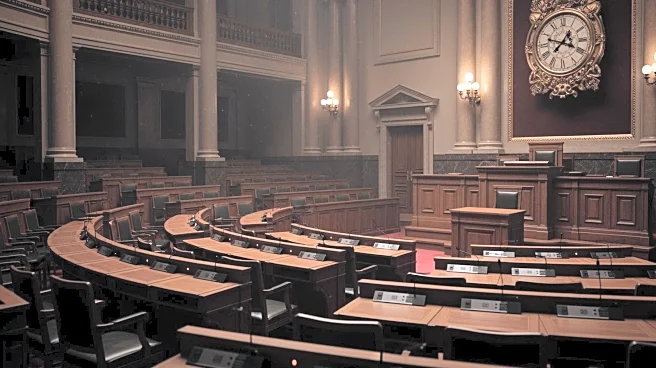
The Lebanese parliament has extended its term by two years due to the ongoing conflict involving the U.S., Israel, and Iran, which has intensified regional tensions. This decision comes as Israel increases its military actions against Lebanon, targeting
Hezbollah's financial arm, al-Qard Al-Hasan, and conducting focused raids in southern Lebanon. Human Rights Watch has accused Israel of using white phosphorus in residential areas, a claim Israel has not confirmed. The conflict has displaced over half a million people in Lebanon, complicating the possibility of holding elections, which were originally scheduled for May.
Why It's Important?
The extension of the Lebanese parliament's term highlights the severe impact of regional conflicts on domestic governance and stability. The ongoing military actions and accusations of illegal warfare tactics, such as the use of white phosphorus, underscore the humanitarian and legal challenges in conflict zones. The situation affects not only the immediate safety and governance in Lebanon but also has broader implications for international relations and human rights advocacy. The conflict's escalation could further destabilize the region, affecting global oil prices and international diplomatic efforts.
What's Next?
As the conflict continues, international bodies and human rights organizations may increase pressure on involved parties to adhere to international law. The Lebanese government faces the challenge of maintaining order and addressing humanitarian needs amid displacement and infrastructure damage. The international community may seek diplomatic solutions to de-escalate tensions, while monitoring the humanitarian impact and potential violations of international law.