







What's Happening?
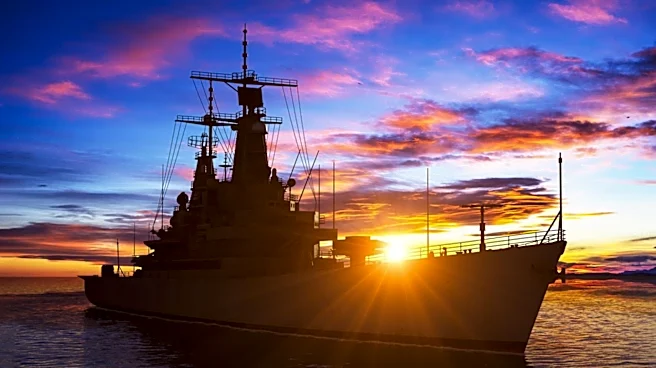
The U.S. Maritime Administration (Marad) has officially taken delivery of the training ship 'Lone Star State,' marking the fourth of five National Security Multi-Mission Vessels (NSMV) destined for the nation's state maritime academies. Built by Hanwha
Philly Shipyard in Philadelphia, this vessel will be homeported at the Texas A&M Maritime Academy in Galveston, Texas, serving as its primary training platform. The 'Lone Star State' is scheduled to be repositioned to Galveston in November for an arrival ceremony and formal handover, with cadets and faculty embarking on its first Sea Term in April 2027. The ship measures 524'5"x88'7" with a scantling draft of 24'7" and a deadweight of 8,487 metric tons, capable of berthing 760 people and achieving a service speed of 18 knots. Each NSMV is equipped with a full training bridge, multiple instructional spaces, berthing for up to 600 cadets, hospital facilities, a helicopter pad, and roll-on/roll-off and container capacity, capable of accommodating up to 1,000 people for humanitarian assistance or disaster relief missions. TOTE Services LLC, the program's vessel construction manager, highlighted that the NSMV program aims to train the next generation of mariners and provide support for natural disasters and humanitarian relief.
Why It's Important?
The delivery of the 'Lone Star State' is a critical development for U.S. maritime capabilities and national security. Marad initiated the NSMV program to address a significant shortage of licensed officers required to crew government and commercial sealift ships, with state maritime academies producing over half of new U.S. merchant marine officers annually. This new vessel will provide state-of-the-art training for future mariners, ensuring they are well-prepared for the demands of modern maritime operations, which is vital for maintaining a robust merchant marine. Beyond training, the NSMVs are designed with dual capabilities, serving as essential assets for humanitarian assistance and disaster relief missions. This multi-mission functionality enhances the nation's ability to respond to crises, both domestically and internationally, bolstering national resilience. The program also showcases an innovative vessel construction manager (VCM) model, which TOTE Services claims cuts acquisition costs by at least 50% compared to traditional government shipbuilding contracts. This cost-effective approach could set a precedent for future government shipbuilding projects, optimizing taxpayer money and accelerating fleet modernization efforts. The investment in these vessels underscores a strategic commitment to strengthening the U.S. maritime workforce and its critical role in national defense and economic stability.
What's Next?
The immediate next step for the 'Lone Star State' is its repositioning to Galveston, Texas, in November for its official arrival ceremony and handover to the Texas A&M Maritime Academy. Following this, the vessel will undergo final preparations before cadets and faculty embark on its inaugural Sea Term in April 2027. This will mark the beginning of its operational life as a training platform. Meanwhile, the fifth and final NSMV, the 'Golden State,' is expected to be delivered to Cal Poly Maritime Academy in Vallejo, California, in 2027, completing the program. The success of the NSMV program and its VCM model will likely be closely evaluated by government agencies and the shipbuilding industry. If proven highly effective, this model could be adopted for other complex shipbuilding projects, influencing future procurement strategies. The continuous training of new mariners on these advanced vessels will gradually alleviate the shortage of licensed officers, strengthening the U.S. merchant marine. Additionally, the 'Lone Star State' and its sister ships will stand ready to be deployed for humanitarian and disaster relief operations as needed, demonstrating their critical role beyond academic training.
Beyond the Headlines
The delivery of the 'Lone Star State' and the broader NSMV program represent a significant strategic shift in how the U.S. approaches maritime education and national preparedness. By integrating advanced training capabilities with humanitarian and disaster relief functions, these vessels embody a holistic approach to maritime power. This dual-purpose design reflects a recognition that modern national security extends beyond traditional military roles to include robust civilian support and emergency response capabilities. The program's emphasis on addressing the shortage of licensed officers highlights a long-term commitment to revitalizing the U.S. merchant marine, which is crucial for economic competitiveness and logistical independence in global trade. Furthermore, the innovative VCM model employed in this program could have profound implications for government contracting and industrial policy. If successful, it could encourage greater collaboration between the public and private sectors, fostering efficiency and innovation in large-scale infrastructure projects. This could lead to a re-evaluation of traditional procurement methods, potentially accelerating the modernization of other critical national assets and ensuring the U.S. remains at the forefront of maritime technology and expertise.