



What's Happening?
Duquesne Light Company (DLC) has committed $2.7 billion towards grid improvements over the next five years in response to increasing power outages, particularly after a '1-in-100-year storm' and a derecho in April of last year that caused widespread disruptions.
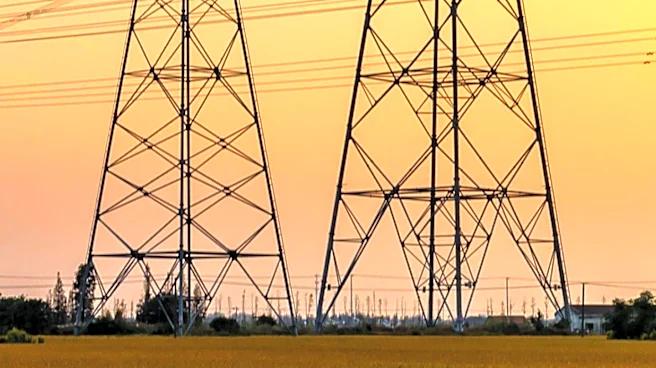
Despite this significant investment, the company acknowledges that these measures will not entirely eliminate outages, especially as climate change intensifies severe weather events. The improvements include automating contractor outreach for downed lines, enhancing outage maps for quicker updates, increasing call center capacity, and implementing two-way text communications with customers. However, the primary focus remains on 'hardening the grid' through equipment replacement and extensive vegetation management, rather than the more costly and time-consuming option of undergrounding power lines.
Why It's Important?
Duquesne Light's substantial investment and its candid admission about the persistence of power outages highlight a critical challenge facing utility companies across the U.S. in the era of climate change. The increasing frequency and intensity of severe weather events are placing unprecedented strain on aging infrastructure, impacting millions of Americans. For U.S. industries and the economy, reliable power is essential; outages can lead to significant financial losses for businesses, disrupt supply chains, and hinder productivity. For society, prolonged power loss affects daily life, safety, and access to essential services, particularly for vulnerable populations. This situation underscores the need for innovative and resilient infrastructure solutions, as current investments, while substantial, may only mitigate rather than fully resolve the growing problem of climate-induced power disruptions.
What's Next?
Duquesne Light will continue to implement its $2.7 billion grid improvement plan over the next five years, focusing on equipment upgrades and vegetation management. Customers can expect ongoing efforts to improve communication during outages, including more detailed outage maps and two-way text updates. However, residents should also anticipate that power outages will remain a reality, especially during severe weather. This will likely prompt more individuals and communities to invest in personal preparedness measures, such as generators and emergency kits. Discussions between utility companies, local governments, and residents about long-term solutions, including the feasibility and funding of undergrounding power lines, are also likely to continue, driven by the increasing impact of climate change on infrastructure resilience.
Beyond the Headlines
The ongoing struggle of Duquesne Light and other utilities to prevent power outages in the face of climate change reveals deeper societal and infrastructural vulnerabilities. Beyond the immediate inconvenience, frequent outages expose inequities, as lower-income communities often lack the resources for backup power or alternative housing during extended disruptions. This situation also highlights the long-term economic burden of climate change, as billions are spent on reactive measures rather than proactive, transformative infrastructure changes. The debate over undergrounding power lines, while costly, points to a larger question about the acceptable level of risk and resilience in modern society. It also underscores the ethical responsibility of utility providers and policymakers to balance cost-effectiveness with public safety and quality of life in a rapidly changing environmental landscape.