

What's Happening?
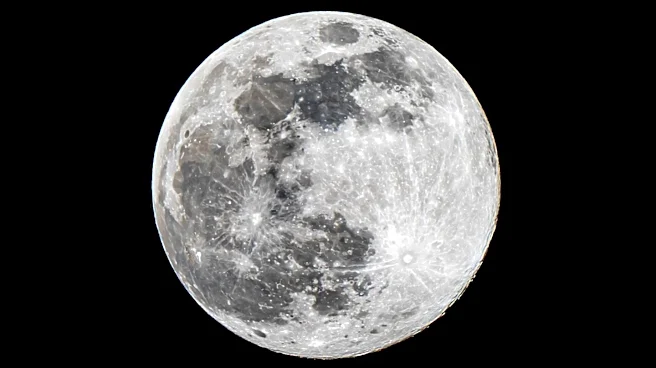
Scientists have confirmed that parts of a SpaceX Falcon 9 rocket crashed on the moon, concluding a year-long collision course. The crash occurred near Einstein Crater on the moon's sunlit western limb. Although visual confirmation is pending until NASA's
Lunar Reconnaissance Orbiter captures images next week, scientists are confident about the impact. The crash was anticipated to create a crater approximately 60 feet wide and 12 feet deep. The event is significant for understanding the moon's geology and refining space exploration models.
Why It's Important?
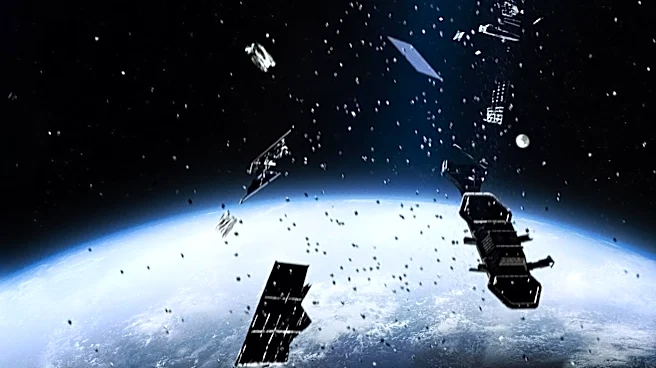
The crash provides a unique opportunity for scientists to study the moon's surface and the behavior of ejecta plumes, which can enhance our understanding of lunar geology. This knowledge is crucial for future space missions and exploration. The incident also highlights the challenges of space debris management and the importance of tracking objects in space to prevent unintended collisions. The data collected from this event could inform policies and practices for safer space exploration.
What's Next?
NASA's Lunar Reconnaissance Orbiter and South Korea's Danuri lunar orbiter will gather images of the crash site to confirm the impact and study the resulting crater. These observations will help refine models for tracking space debris and understanding lunar impacts. The findings could influence future space mission planning and debris management strategies.