


What's Happening?
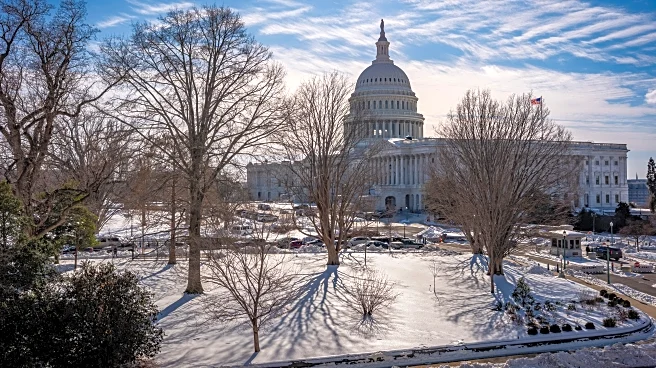
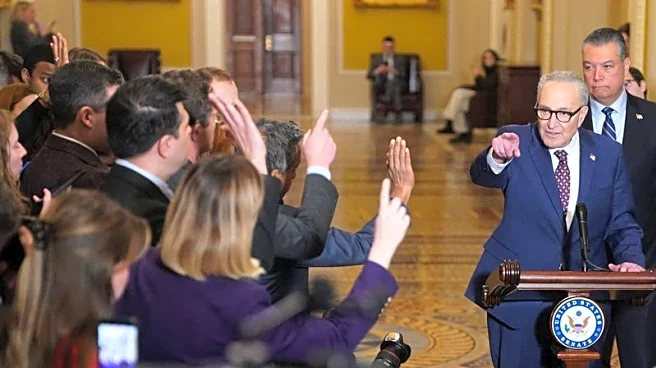
The Senate has passed a bill to fund most of the federal government, aiming to prevent a prolonged shutdown. The vote, which concluded with a 71-29 result, saw opposition from five Republicans, 23 Democrats, and independent Senator Bernie Sanders. The bill includes
a temporary funding extension for the Department of Homeland Security (DHS) to allow time for negotiations on new accountability measures for immigration agents. Despite the Senate's approval, the House will not consider the legislation until early next week, leading to a partial government shutdown over the weekend. The shutdown is expected to be less severe than the 43-day shutdown last fall. The agreement separates DHS funding from a larger spending bill, following the killing of Alex Pretti by federal immigration authorities. The bill funds DHS at existing levels for two weeks, providing time for further negotiations on immigration enforcement restrictions.
Why It's Important?
The Senate's decision to pass the funding bill is crucial in averting a long-term government shutdown, which could have significant impacts on federal operations and services. The temporary funding for DHS highlights ongoing tensions between Democrats and the Trump administration over immigration enforcement practices. The negotiations over DHS funding and immigration enforcement measures reflect broader political divisions on immigration policy. The outcome of these negotiations could influence future immigration policies and enforcement practices, affecting millions of individuals and families across the U.S. The partial shutdown, although expected to be limited in scope, underscores the challenges in reaching bipartisan agreements on contentious issues like immigration.
What's Next?
The House is expected to take up the legislation early next week. If passed, it will set the stage for two weeks of negotiations over the proposed changes to ICE and Border Patrol operations. These negotiations will be critical in determining whether the temporary funding extension can lead to a more permanent resolution. Key issues include the implementation of new restrictions on immigration enforcement, such as warrant requirements and the use of body cameras. The outcome of these negotiations will be closely watched by political leaders, advocacy groups, and the public, as they could have significant implications for immigration policy and enforcement in the U.S.