


What's Happening?
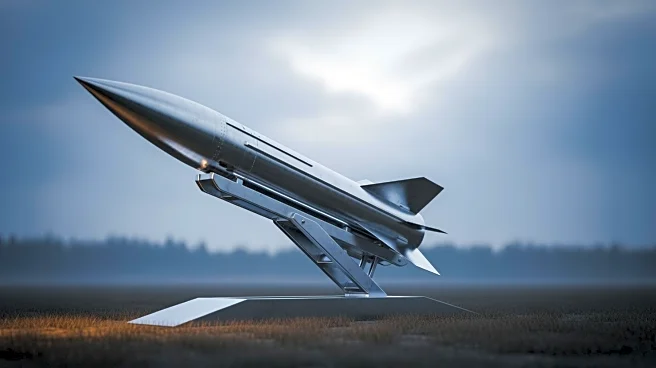
Belarusian President Alexander Lukashenko announced that Russia has deployed its latest nuclear-capable Oreshnik missile system to Belarus. This development comes as peace talks regarding the ongoing conflict in Ukraine reach a critical phase. The Oreshnik,
an intermediate-range ballistic missile, is now entering combat duty in Belarus. Russian President Vladimir Putin confirmed the deployment, emphasizing the missile's capabilities, including its speed and difficulty to intercept. The deployment follows Russia's previous use of Belarusian territory to launch a full-scale invasion of Ukraine in February 2022. The Oreshnik system, which can carry both conventional and nuclear warheads, has been touted by Russian state media for its rapid strike capabilities against NATO targets.
Why It's Important?
The deployment of the Oreshnik missile system in Belarus significantly escalates the military tension in Eastern Europe, particularly concerning NATO and its member states. The missile's presence in Belarus, a close ally of Russia, underscores the strategic military alliance between the two nations and poses a direct threat to NATO's eastern flank. This move could potentially alter the security dynamics in the region, as the missile's range includes key NATO locations. The deployment also highlights the ongoing geopolitical struggle between Russia and Western nations, with Belarus playing a pivotal role. The situation could lead to increased military readiness and strategic recalibrations by NATO, impacting regional stability and international diplomatic efforts.
What's Next?
The deployment of the Oreshnik missiles is likely to prompt a response from NATO and its allies, potentially leading to increased military deployments or strategic adjustments in the region. Diplomatic efforts to resolve the Ukraine conflict may face additional challenges as the presence of these missiles complicates negotiations. The international community will be closely monitoring the situation, with potential sanctions or diplomatic measures against Belarus and Russia being considered. The strategic implications of this deployment may also influence future arms control discussions and treaties, particularly concerning intermediate-range missiles.
Beyond the Headlines
The deployment of nuclear-capable missiles in Belarus raises significant ethical and legal questions regarding the proliferation of nuclear weapons and the potential lowering of the threshold for their use. The situation also highlights the complex relationship between Belarus and Russia, with Belarus balancing its ties with Moscow against potential rapprochement with Western nations. The release of political prisoners by Lukashenko, in exchange for lifted U.S. sanctions, indicates a nuanced diplomatic strategy that could influence Belarus's future international relations. The deployment may also impact domestic politics in Belarus, as the government navigates its role in the broader geopolitical landscape.