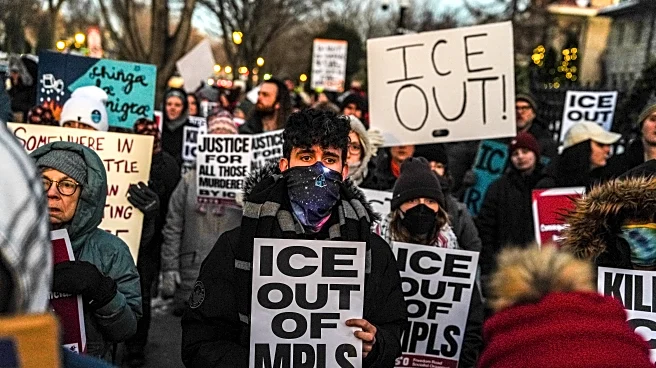




What's Happening?
A federal judge in Texas has issued a temporary injunction preventing the U.S. Immigration and Customs Enforcement (ICE) from removing a five-year-old child, Liam Conejo Ramos, and his father, Adrian Conejo Arias, who were detained in a Minneapolis suburb.
The order, issued by U.S. District Judge Fred Biery, mandates that the pair cannot be transferred outside the judicial district in Texas while their habeas case challenging their detention is ongoing. The detention occurred on January 20, 2026, and has sparked conflicting narratives. According to the family's attorney, both father and son had a pending asylum case and were not subject to a deportation order. The attorney emphasized that they entered the U.S. legally to seek asylum. However, the Department of Homeland Security (DHS) claims that Adrian Conejo Arias fled during a targeted operation, abandoning his child, which ICE officers then safeguarded. The DHS maintains that their actions were consistent with past immigration enforcement procedures.
Why It's Important?
This case highlights the ongoing debate over immigration enforcement practices in the U.S., particularly concerning the treatment of minors. The temporary injunction provides a reprieve for the family, allowing their legal challenge to proceed without the immediate threat of deportation. The conflicting accounts from DHS and the family's representatives underscore the complexities and contentious nature of immigration enforcement, especially when minors are involved. This situation could influence public opinion and policy discussions regarding immigration enforcement tactics and the rights of asylum seekers. The case also raises questions about the consistency and transparency of ICE operations, potentially impacting future immigration policy and enforcement strategies.
What's Next?
The legal proceedings will continue as the habeas case challenging the detention of Liam Conejo Ramos and his father moves forward. The temporary injunction ensures that they remain within the judicial district, allowing their legal team to argue their case without the immediate threat of removal. This case may attract further attention from immigration advocacy groups and could prompt calls for policy changes regarding the handling of similar cases. The outcome of this case could set a precedent for how immigration enforcement actions involving minors are conducted and reviewed in the future.