




What's Happening?
Central Sands Dairy, LLC, a dairy farm located in Nekoosa, Wisconsin, has been ordered to pay $245,000 to resolve a civil environmental enforcement action. The Wisconsin Department of Justice (DOJ) announced the settlement, which addresses alleged violations
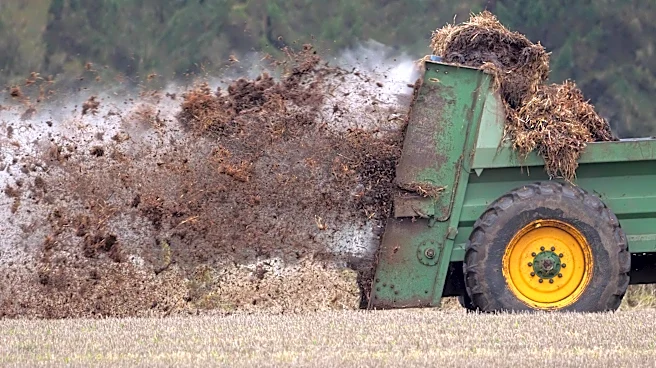
of the state’s wastewater discharge laws. According to the DOJ, Central Sands Dairy used manure and process wastewater to fertilize fields in Juneau County. The state alleged that the dairy discharged manure into groundwater, violating state groundwater quality standards. Additionally, the state claimed that Central Sands improperly applied manure to its fields, failed to upgrade a manure storage facility, and neglected to submit a required plan to the Wisconsin Department of Natural Resources. As part of the resolution, Central Sands Dairy is mandated to abandon its waste storage facilities at its large, concentrated animal feeding operations by July 1, 2027.
Why It's Important?
This enforcement action is significant as it underscores Wisconsin's commitment to protecting its natural resources, particularly groundwater quality, from agricultural pollution. Dairy farming is a major industry in Wisconsin, and the proper management of manure and wastewater is crucial to prevent environmental contamination. Violations like those alleged against Central Sands Dairy can lead to serious ecological damage, including the pollution of drinking water sources and harm to aquatic ecosystems. The substantial fine serves as a deterrent to other agricultural operations, signaling that environmental regulations will be enforced. Furthermore, the requirement for the dairy to abandon its waste storage facilities by a specific date indicates a move towards more sustainable and compliant waste management practices within the agricultural sector. This case highlights the ongoing tension between agricultural productivity and environmental protection, emphasizing the need for robust regulatory oversight and compliance.
What's Next?
Central Sands Dairy, LLC is now required to pay the $245,000 fine and must comply with the order to abandon its waste storage facilities by July 1, 2027. The Wisconsin Department of Justice and the Department of Natural Resources will likely monitor the dairy's compliance with these terms. This case may prompt increased scrutiny of other large-scale agricultural operations in Wisconsin to ensure adherence to wastewater discharge and manure management regulations. Other dairy farms and concentrated animal feeding operations (CAFOs) in the state may review their own practices to avoid similar penalties. Environmental advocacy groups will likely view this as a positive step towards accountability and may use this case to push for stronger environmental protections and enforcement within the agricultural sector. The outcome could also influence future legislative discussions regarding agricultural waste management and environmental standards in Wisconsin.
Beyond the Headlines
This case delves into the broader environmental challenges posed by industrial agriculture, particularly the management of animal waste. The scale of modern dairy operations often produces vast quantities of manure, which, if not properly managed, can become a significant source of water pollution. The incident with Central Sands Dairy highlights the complex interplay between economic activity, environmental stewardship, and public health. Beyond the immediate financial penalty, such violations can erode public trust in agricultural practices and lead to calls for more stringent regulations or alternative farming methods. The long-term implications include potential shifts in agricultural policy, increased investment in sustainable waste treatment technologies, and a greater emphasis on environmental impact assessments for large farming operations. This situation also brings to light the ongoing debate about the balance between supporting agricultural industries and safeguarding the environment for future generations.