





What's Happening?
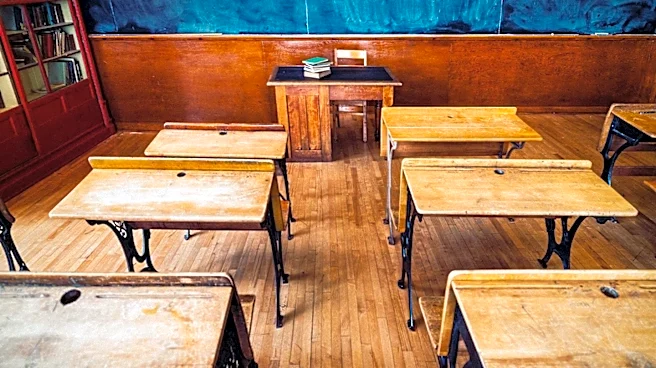
In 1966, Donogh O’Malley, then Minister for Education in Ireland, made a significant announcement declaring that post-primary education would become free up to Intermediate Certificate level, effective from September 1967. This initiative also included
provisions for free transport to ensure accessibility for rural children. The announcement was notable for its ambition and timing, as it preceded the full arrangement of necessary infrastructure, staffing, and funding for a national scheme. This proposal aimed to transform secondary education from a system constrained by fees, distance, and family resources into a public entitlement and an economic necessity for a country seeking industrial employment. It directly addressed issues of early school-leaving and educational attainment highlighted by the April census of that year. Despite being a promise at the time, O’Malley's declaration immediately shifted public discourse on education.
Why It's Important?
This policy marked a pivotal moment in Irish social and economic development, moving away from a system where access to secondary education was largely dependent on financial means. By framing education as a public entitlement and an economic necessity, the initiative aimed to foster a more skilled workforce, crucial for a nation striving for industrial growth. The provision of free transport was particularly vital for rural areas, addressing geographical barriers that previously limited educational opportunities for many children. This move had the potential to significantly reduce social inequality by opening doors to higher education and better employment prospects for a broader segment of the population. It also signaled a shift in national priorities, emphasizing social development and economic opportunity over military independence, reflecting a younger political cohort's vision for the Republic of Ireland.
What's Next?
The formal implementation of the free post-primary scheme was scheduled for September 1967. Following the announcement, the government would need to finalize the logistical and financial arrangements to support this nationwide initiative. This included securing funding, developing new school buildings, recruiting and training additional staff, and establishing efficient transport networks, especially for rural students. The proposal faced scrutiny regarding its cost and the government's preparedness, suggesting ongoing debates and adjustments would be necessary. The success of the scheme would depend on effective planning and execution to ensure that the promise of free education translated into tangible improvements in educational attainment and economic opportunities across the country. The long-term impact would be observed in subsequent generations' access to education and their contribution to the Irish economy.
Beyond the Headlines
The announcement of free post-primary education in Ireland in 1966 carried profound ethical and cultural implications. It challenged the traditional view of education as a privilege for those who could afford it, re-framing it as a fundamental right and a tool for national progress. This shift reflected a broader societal aspiration to build a more equitable republic, moving beyond the legacy of the revolutionary generation towards a focus on social and economic advancement. The policy's emphasis on economic necessity underscored a growing recognition of human capital as a key driver for national prosperity in a modernizing world. Culturally, it aimed to foster a more educated populace, potentially leading to greater social mobility and a more informed citizenry. The initiative also highlighted the evolving role of the state in providing essential services and shaping the future of its citizens, setting a precedent for future social welfare policies.