






What's Happening?
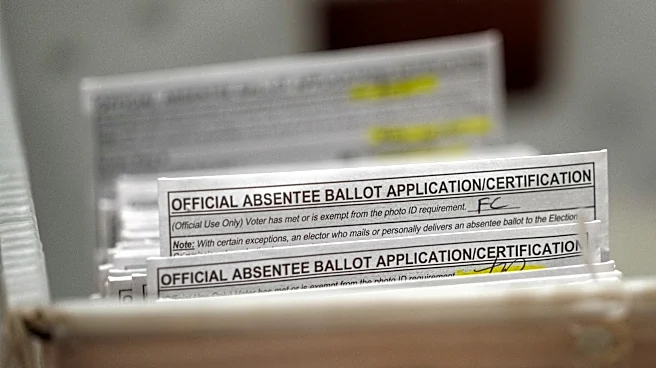
Two Democratic members of the Wisconsin Elections Commission, Ann Jacobs and Mark Thomsen, are seeking to intervene in a lawsuit challenging the commission's recent guidance on absentee ballots. The guidance, passed by a 4-2 vote, prohibits absentee voters
from 'spoiling' their ballots to cast new ones if they change their minds or if their preferred candidate drops out. This policy has come under scrutiny during a tumultuous Democratic primary for governor, where several candidates have exited the race. Jacobs and Thomsen, who opposed the guidance, argue that it treats absentee voters unfairly compared to those voting on Election Day, who are allowed to spoil their ballots twice. They claim the commission's stance violates equal protection and have filed a motion to intervene as individuals, citing inadequate representation by commission attorneys.
Why It's Important?
The lawsuit and the intervention by Jacobs and Thomsen highlight significant concerns about voter rights and election integrity. The ability to change a vote is a critical aspect of democratic participation, especially in dynamic election scenarios where candidates may drop out. The outcome of this legal challenge could set a precedent for how absentee ballots are handled in future elections, potentially affecting voter turnout and confidence in the electoral process. The case also underscores the ongoing debate over election laws and the balance between preventing fraud and ensuring voter accessibility. The involvement of the Republican National Committee, which opposes the intervention, further emphasizes the political stakes and the broader national implications for election policies.
What's Next?
The court's decision on whether to allow Jacobs and Thomsen to intervene could influence the timeline and outcome of the lawsuit. If the court sides with them, the commission may be required to revise its guidance, potentially allowing absentee voters to spoil their ballots. This could lead to logistical challenges for election officials, who would need to manage the process of identifying and replacing spoiled ballots. The case is likely to attract attention from political parties and advocacy groups, who may seek to influence the proceedings or use the outcome to support broader electoral reforms. The decision could also impact upcoming elections, as voters and officials adjust to any changes in absentee voting procedures.