




What's Happening?
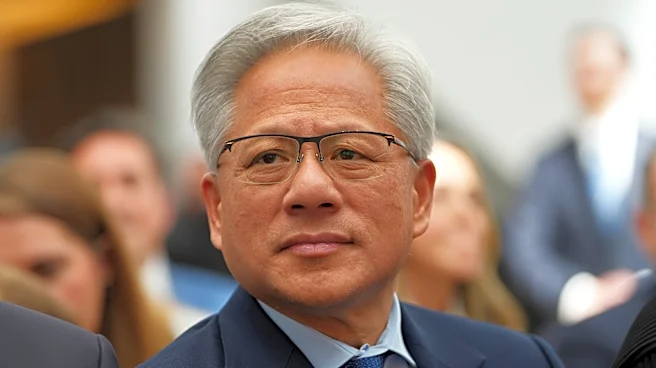
Nvidia CEO Jensen Huang is under investigation by the FBI regarding allegations of an extramarital relationship with Alice Huang, a Chinese businesswoman suspected of being a spy for Beijing. The company announced an internal investigation into the matter.
Alice Huang, also known as Huang Le, is accused by U.S. intelligence services of passing information to Chinese authorities concerning U.S. artificial intelligence policy and Nvidia's business operations. The two reportedly maintained an intimate relationship for the past couple of years, first seen together in mid-2024. Nvidia, the world's largest microprocessor manufacturer, controls 80% to 90% of the market for AI accelerators, generating over $100 billion annually from GPUs used in data centers. President Trump acknowledged the FBI's investigation, stating, 'I think that he'll be in good shape,' and mentioned speaking with Huang, who denied knowledge of the woman being a spy. The allegations come amidst heightened U.S.-China tensions over technology and export controls on advanced chips.
Why It's Important?
This situation carries significant implications for U.S. national security, the technology industry, and U.S.-China relations. Nvidia's near-monopoly in AI chips makes its technology critical for both economic and military advancements, rendering any potential compromise of its intellectual property or strategic information a major concern. The alleged espionage highlights China's aggressive efforts to acquire advanced technology and close the AI gap with the U.S., intensifying the ongoing tech rivalry. For the U.S. government, the incident underscores the challenges of protecting sensitive technological assets and managing the influence of foreign actors within critical industries. The involvement of a high-profile CEO in such allegations could also lead to increased scrutiny of corporate executives with ties to foreign entities, potentially impacting international business collaborations and the movement of key personnel in the tech sector. The episode further complicates the delicate balance between fostering innovation and safeguarding national interests.
What's Next?
The FBI's investigation into Jensen Huang and the alleged Chinese espionage will likely continue, with potential legal and diplomatic ramifications. Nvidia has stated it has 'no reason to believe that either national security or Nvidia secrets were compromised,' but the ongoing investigation could impact the company's reputation and operations. The incident may lead to stricter U.S. government oversight on technology exports and corporate engagements with foreign entities, particularly those from rival nations. It could also prompt a re-evaluation of security protocols within leading tech companies to prevent similar incidents. The broader geopolitical tensions between the U.S. and China, particularly concerning AI and semiconductor technology, are expected to escalate, potentially leading to further trade restrictions or diplomatic actions. The outcome of this investigation could set precedents for how the U.S. addresses alleged foreign influence in its critical technology sectors.
Beyond the Headlines
This case delves into the complex ethical and geopolitical dimensions of global technology leadership. It exposes the vulnerabilities inherent in a highly interconnected world where personal relationships can become conduits for state-sponsored espionage, particularly in sectors deemed vital for national power. The alleged attempt to influence Nvidia's CEO to ease chip export restrictions to China highlights the strategic importance of technology in international relations and the lengths to which nations will go to secure a technological advantage. The incident also raises questions about the personal responsibilities of corporate leaders in safeguarding national interests, especially when their companies hold near-monopolistic positions in critical technologies. The revelations could trigger a broader debate about the ethical boundaries of corporate lobbying, the role of intelligence agencies in monitoring private citizens, and the balance between individual privacy and national security in an era of intense geopolitical competition.