






What's Happening?
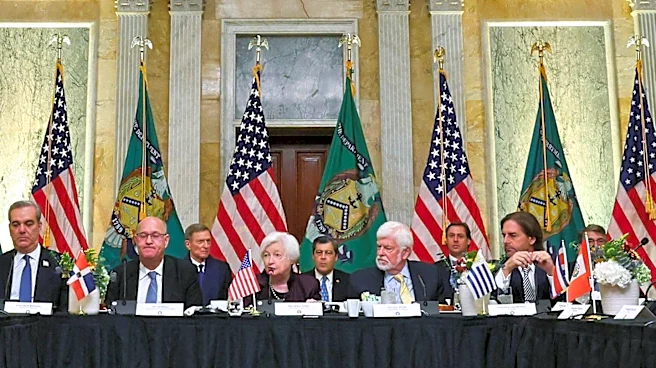
Representative Gregory W. Meeks, United States Representative for New York’s Fifth Congressional District and Ranking Member of the House Foreign Affairs Committee, met with His Excellency Joseph Nyuma Boakai, Sr., President of the Republic of Liberia,
in Washington, D.C. The discussions focused on strengthening the longstanding partnership between Liberia and the United States. President Boakai expressed appreciation for the historic friendship and emphasized his administration’s commitment to deepening bilateral cooperation across various areas. Key topics included Liberia’s democratic progress, economic development priorities, regional peace and security, trade and investment, and opportunities for stronger institutional and people-to-people partnerships. President Boakai highlighted Liberia’s commitment to democratic governance, the rule of law, accountable public institutions, and creating an enabling environment for sustainable economic growth. He also underscored the importance of increasing American private-sector engagement and expanding mutually beneficial trade and investment between the two nations.
Why It's Important?
This meeting signifies the continued importance of diplomatic and economic ties between the United States and Liberia, a relationship rooted in historical connections. For the U.S., strengthening this partnership aligns with its broader foreign policy goals of promoting democracy, stability, and economic development in Africa. Liberia's commitment to democratic governance and its expanding role in multilateral affairs, including its service as a non-permanent member of the United Nations Security Council for the 2026–2027 term, make it a significant partner in regional and global challenges. Increased American private-sector engagement and expanded trade could provide substantial economic opportunities for both countries, fostering job creation and economic growth in Liberia while opening new markets for U.S. businesses. The discussions on regional peace and security also highlight Liberia's role in contributing to stability in West Africa, an area of strategic interest for the U.S. This engagement reinforces the U.S.'s commitment to supporting democratic institutions and sustainable development abroad.
What's Next?
The meeting concluded with a reaffirmation of the enduring Liberia–United States relationship and a shared interest in building a forward-looking partnership. Future steps will likely involve continued engagement in areas of economic cooperation and development, as discussed by Representative Meeks and President Boakai. This could include specific initiatives to encourage American private-sector investment in Liberia and efforts to facilitate trade. Liberia's ongoing commitment to democratic values, peace, and security will be crucial in sustaining this partnership. The collaboration on peacebuilding and international security, particularly given Liberia's role on the UN Security Council, suggests potential for joint efforts on global issues. Both nations are expected to continue working constructively to address shared regional and global challenges, with follow-up discussions and concrete actions anticipated to further solidify their bilateral ties.
Beyond the Headlines
The discussions between Representative Meeks and President Boakai extend beyond immediate policy points, touching upon the deeper historical and cultural bonds between the U.S. and Liberia. Liberia, founded by freed American slaves, holds a unique place in U.S. foreign relations, often viewed through a lens of shared history and democratic aspirations. This meeting underscores the U.S.'s long-term commitment to supporting Liberia's journey towards stable democracy and economic self-sufficiency. The emphasis on 'people-to-people partnerships' suggests an understanding that strong bilateral relations are built not just on governmental agreements but also on cultural exchange and mutual understanding. The focus on creating an 'enabling environment for sustainable economic growth' in Liberia also reflects a broader U.S. strategy to foster self-reliance and reduce dependency on aid, promoting a more equitable and robust partnership. This approach aims to empower Liberia to address its own challenges and contribute more effectively to regional and global stability.