







What's Happening?
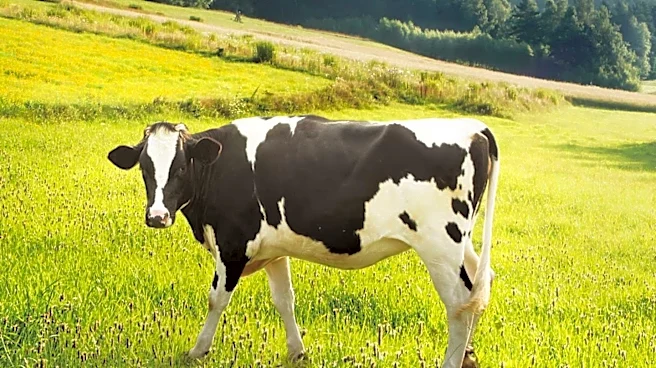
A recent preprint study indicates that organic beef farming may be more environmentally detrimental than conventional methods across several metrics, including carbon emissions, water usage, reactive nitrogen loss, and fossil fuel consumption. The study,
which has not yet undergone peer review, found that organic beef production emitted 95% more carbon per kilogram of live cattle body weight compared to conventional production. This figure accounts for emissions from crop production for feed, farming equipment and fuel, and enteric methane emissions from the animals themselves. While organic farming is often perceived as more sustainable, this research suggests a more complex environmental impact, particularly concerning greenhouse gas emissions. The authors acknowledge that their study did not fully account for land use emissions, which could further impact the overall environmental assessment of both farming types.
Why It's Important?
This study challenges common perceptions about the environmental benefits of organic farming, particularly within the beef industry. For U.S. consumers, who often associate 'certified organic' with environmental sustainability, these findings could influence purchasing decisions and demand for different types of beef. For the agricultural sector, the research highlights the need for a nuanced understanding of environmental impacts across various farming practices. If organic beef production indeed has a higher carbon footprint, it could lead to re-evaluations of agricultural policies, subsidies, and marketing strategies that currently favor organic products based on environmental claims. This could also impact the broader discussion on sustainable food systems and the role of different farming methods in mitigating climate change, potentially shifting focus towards other factors like overall productivity and land efficiency.
What's Next?
The findings of this preprint study will likely prompt further scientific scrutiny and debate within the agricultural and environmental communities. Future research may delve deeper into the methodologies used, explore additional environmental factors, and conduct more comprehensive life-cycle assessments to validate or refute these initial conclusions. Policymakers and regulatory bodies may consider these findings when developing or revising agricultural standards and environmental regulations, potentially leading to new guidelines for sustainable beef production. Consumers might also become more discerning about environmental claims, demanding greater transparency and more detailed information about the carbon footprint of their food choices. The alternative protein industry may leverage such studies to further advocate for plant-based and cultivated meat options as more environmentally friendly alternatives.
Beyond the Headlines
The study's implications extend beyond immediate environmental concerns, touching upon the ethical and economic dimensions of food production. The perception of 'organic' as inherently superior environmentally is deeply ingrained in consumer consciousness, and this research could spark a broader re-evaluation of how environmental sustainability is defined and measured in agriculture. It highlights the complexity of assessing environmental impact, where factors like land use efficiency and overall productivity can sometimes outweigh perceived benefits of certain farming practices. This could lead to a more holistic approach to sustainable agriculture, focusing on a wider range of metrics beyond just organic certification. Furthermore, it underscores the ongoing challenge of balancing food security with environmental protection, especially as global demand for food continues to rise.