



What's Happening?
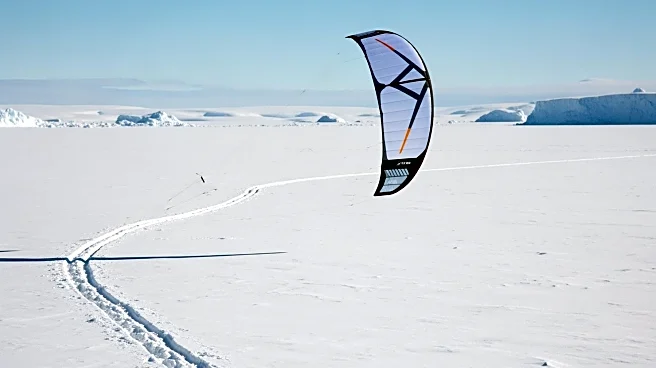
Explorer Matthieu Tordeur and glaciologist Heidi Sevestre are undertaking a 4,000-kilometer kite-skiing expedition across Antarctica. The mission aims to collect data using ground-penetrating radar to understand the ice sheet's past and future. This expedition,
which began on November 3, is the first of its kind to use kite-skiing for polar science. The duo is navigating challenging terrain, including sastrugi, to gather data that could provide insights into whether increased snowfall in East Antarctica offsets coastal melting. Their findings are expected to enhance the accuracy of satellite data interpretations, crucial for understanding the stability of the ice sheet under current climate conditions.
Why It's Important?
The expedition's findings could significantly impact our understanding of climate change effects on Antarctica. By providing more accurate data on ice sheet stability, the research could influence global climate models and policy decisions. The potential discovery of ancient ice layers could reveal whether West Antarctica, which holds enough ice to raise sea levels by up to 5 meters, remained intact during past interglacial periods. This information is vital for predicting future sea level rise and its global implications, affecting coastal communities and economies worldwide.
What's Next?
The expedition is set to continue until the Antarctic summer ends, with the team aiming to reach Hercules Inlet in West Antarctica. The data collected will be analyzed to determine the ice sheet's response to climate forcing. This could lead to further research initiatives and collaborations to refine climate models. The scientific community and policymakers will likely monitor the results closely, as they could inform future climate action and adaptation strategies.
Beyond the Headlines
This expedition highlights the innovative use of kite-skiing in scientific research, offering a sustainable and efficient method for data collection in remote areas. It also underscores the importance of interdisciplinary collaboration in addressing complex environmental challenges. The journey's success could inspire similar approaches in other polar regions, contributing to a broader understanding of global climate dynamics.