





What's Happening?
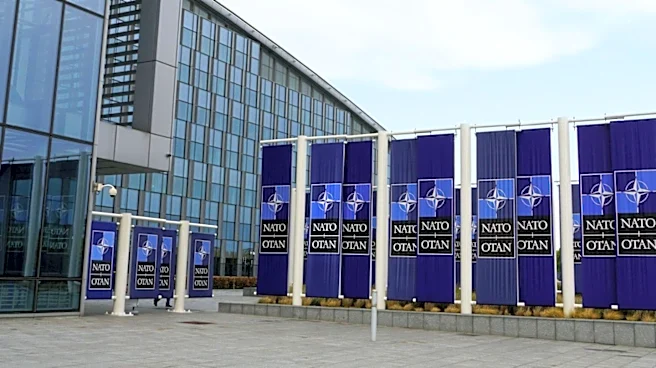
At the recent NATO summit, President Trump engaged in a series of disputes with European leaders, notably with Italian Prime Minister Giorgia Meloni. Trump accused Meloni of seeking a photo opportunity with him at the G7 summit, a claim she denied. The
tensions were exacerbated by Italy's refusal to allow the use of its airfields for U.S. strikes on Iran. Additionally, Trump expressed dissatisfaction with NATO, criticizing the organization for not aligning with his policies and reiterating his controversial desire to acquire Greenland. The summit also saw Trump in a contentious mood, as he criticized allies like Israel and Spain over military and trade issues. Despite these conflicts, Trump later described a closed-door meeting with NATO leaders as a moment of unity, claiming there was 'a lot of love in that room.'
Why It's Important?
The events at the NATO summit highlight ongoing challenges in U.S.-European relations under President Trump's leadership. His confrontational approach and unilateral decisions have strained alliances, potentially impacting international cooperation on security and defense. The disputes with European leaders, particularly over military strategy and territorial ambitions, underscore a shift in traditional diplomatic norms. Trump's actions could lead to a reevaluation of U.S. commitments to NATO and influence European countries to seek alternative security arrangements. The situation also reflects broader geopolitical tensions, as Trump's policies may affect global stability and the U.S.'s role as a leader in international affairs.
What's Next?
Following the summit, it is likely that European leaders will reassess their diplomatic strategies with the U.S., potentially seeking to strengthen intra-European defense mechanisms. The ongoing disputes may prompt NATO to address internal divisions and explore ways to maintain cohesion among member states. Additionally, Trump's continued interest in Greenland and his stance on military engagements could lead to further diplomatic negotiations or conflicts. The U.S. administration may also face domestic scrutiny over its foreign policy decisions, influencing future political dynamics and electoral outcomes.
Beyond the Headlines
The summit's developments raise questions about the long-term implications of President Trump's foreign policy approach. His emphasis on transactional diplomacy and personal relationships with leaders may alter traditional alliances and reshape global power structures. The focus on territorial acquisitions and military dominance reflects a shift towards a more assertive U.S. foreign policy, which could have lasting effects on international norms and treaties. Furthermore, the internal dynamics within NATO and the U.S.'s role in the organization may evolve, impacting global security frameworks and diplomatic relations.