





What's Happening?
A new scientific review, published in the Journal of Applied Physiology by researchers Laura Leuci and Luca Carenzo, outlines the four physiological stages of unexpected cold-water immersion and provides survival tips. The review emphasizes that hypothermia
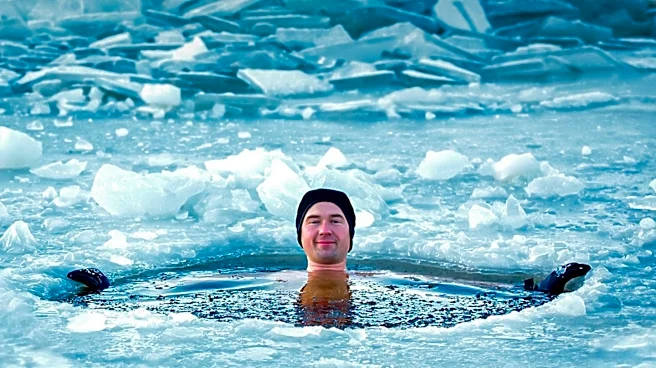
is often not the immediate threat, with a significant number of cold-water deaths occurring before hypothermia sets in or shortly after rescue. The first stage, the 'cold shock response,' involves an involuntary gasp and hyperventilation upon immersion in water below 15 degrees Celsius (59 degrees Fahrenheit), increasing the risk of inhaling water. The second stage is 'swimming failure,' where limbs lose function as they cool, impairing the ability to swim or hold on. The third stage is 'hypothermia,' occurring when core body temperature drops below 35 degrees Celsius (95 degrees Fahrenheit), leading to impaired decision-making and loss of consciousness. The final stage is 'circum-rescue collapse,' where individuals die during or immediately after rescue, potentially due to a sudden drop in blood pressure from the loss of hydrostatic pressure or a 'parasympathetic surge' of relief.
Why It's Important?
This review is important for U.S. public safety and emergency response, particularly for individuals engaging in water activities in colder climates or during colder seasons. The findings challenge common misconceptions about cold-water survival, highlighting that immediate physiological responses like cold shock and swimming failure, as well as post-rescue complications, are often more critical than hypothermia itself. Understanding these stages can lead to more effective public awareness campaigns, improved water safety protocols, and enhanced training for rescue personnel. For instance, the 'Float to Live' advice during cold shock can significantly reduce initial drowning risks. The identification of 'circum-rescue collapse' mechanisms can inform rescue techniques, such as keeping victims horizontal, to prevent sudden drops in blood pressure. This knowledge can ultimately save lives by equipping individuals and first responders with accurate information and actionable strategies for cold-water incidents.
What's Next?
The insights from this review are expected to influence water safety guidelines and training programs across the U.S. Organizations involved in water recreation, such as boating associations, outdoor adventure groups, and emergency services, may update their recommendations to reflect the four stages of cold-water immersion and the specific survival tactics for each. Public education efforts could focus on teaching the 'Float to Live' technique and the importance of wearing personal flotation devices. For rescue teams, the understanding of 'circum-rescue collapse' could lead to revised protocols for extracting individuals from cold water, emphasizing horizontal recovery to mitigate blood pressure drops. Further research may also be spurred to better understand the 'autonomic conflict' and other physiological mechanisms at play, especially given the challenges of studying these phenomena in laboratory settings. Habituation to cold water is also noted as a countermeasure, suggesting potential for controlled exposure training.
Beyond the Headlines
Beyond immediate survival, this research delves into the complex physiological responses of the human body to extreme environmental stressors. The concept of 'autonomic conflict,' where the sympathetic and parasympathetic nervous systems receive conflicting signals, offers a deeper understanding of how the body can fail even in seemingly minor cold-water incidents, especially for individuals with pre-existing heart conditions. The 'circum-rescue collapse' phenomenon highlights the delicate balance of the body's systems and the potential for even positive events like rescue to trigger fatal responses. This has broader implications for understanding stress physiology and the body's limits. The review also subtly touches upon the psychological aspect of survival, as the emotional impact of impending rescue is considered a potential factor in collapse. This holistic view of cold-water immersion underscores the need for comprehensive preparedness that addresses not only physical dangers but also the intricate biological and psychological reactions to extreme conditions.