



What's Happening?
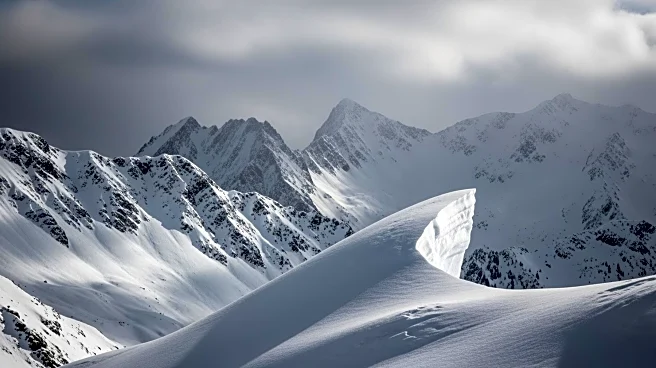
Recent changes in winter weather patterns are making avalanche conditions more unpredictable in the Western United States. This development follows a tragic avalanche near Lake Tahoe, California, which resulted in the deaths of nine individuals. Experts,
including Kaleb Roedel from the Mountain West News Bureau, are examining how these climate shifts are affecting snow stability and avalanche risks. The variability in snowfall and temperature is complicating efforts to forecast and mitigate avalanche dangers, posing challenges for both safety officials and outdoor enthusiasts.
Why It's Important?
The increased unpredictability of avalanche conditions due to changing winter patterns has significant implications for public safety and the outdoor recreation industry. As avalanches become harder to predict, there is a heightened risk for skiers, snowboarders, and other winter sports enthusiasts. This could lead to increased demand for improved safety measures and forecasting technologies. Additionally, the tourism industry, which relies heavily on winter sports, may face economic impacts if safety concerns deter visitors. The situation underscores the broader effects of climate change on natural disaster risks and the need for adaptive strategies.
What's Next?
In response to these challenges, there may be increased investment in research and technology to improve avalanche prediction and safety measures. Government agencies and private organizations could collaborate to develop more accurate forecasting models and enhance public awareness campaigns. The outdoor recreation industry might also implement stricter safety protocols and offer more training for those venturing into avalanche-prone areas. As climate patterns continue to evolve, ongoing monitoring and adaptation will be crucial to managing the risks associated with avalanches.