
What's Happening?
Gordon Chang, a senior fellow at the Gatestone Institute, has raised concerns about Chinese electric vehicles (EVs) entering the U.S. through Canada, potentially posing national security risks. These vehicles,
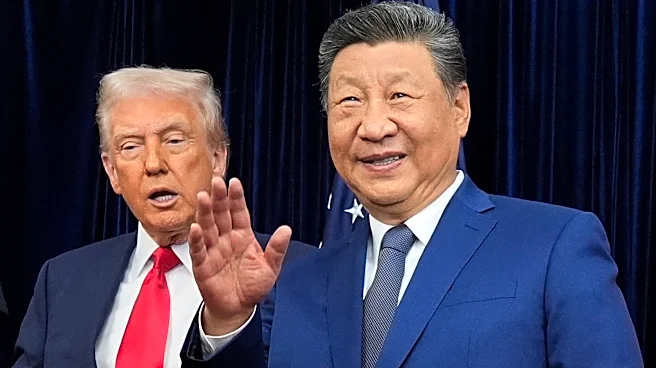
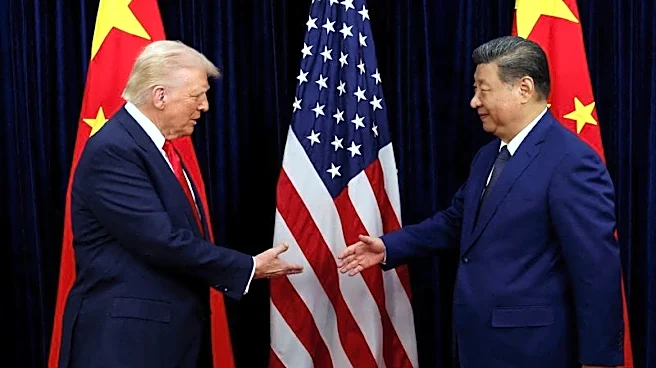
equipped with advanced surveillance technology, could collect and transmit sensitive data back to China. The issue is gaining attention as President Trump prepares for a meeting with Chinese President Xi Jinping. U.S. lawmakers, including Sen. Bernie Moreno, are advocating for legislation to block these vehicles, describing them as 'Trojan horses' due to their data collection capabilities. Chang warns that Canada's reduced tariffs on Chinese EVs could facilitate their entry into the U.S., exacerbating surveillance concerns.
Why It's Important?
The potential for Chinese EVs to act as surveillance tools highlights the broader geopolitical tensions between the U.S. and China, particularly in technology and trade. This issue underscores the need for stringent regulations on foreign technology imports to protect national security. The situation could lead to increased scrutiny of Chinese tech products and influence U.S. trade policies. It also reflects the growing concern over data privacy and the security implications of interconnected devices, which could impact consumer trust and market dynamics in the automotive industry.
What's Next?
As President Trump and President Xi prepare to meet, the issue of Chinese EVs could become a focal point in discussions. Legislative efforts to block these vehicles may gain momentum, potentially leading to new trade restrictions or tariffs. The U.S. government may also explore technological solutions to mitigate surveillance risks. The outcome of these developments could affect U.S.-China relations and the future of international trade in the automotive sector.