
What's Happening?
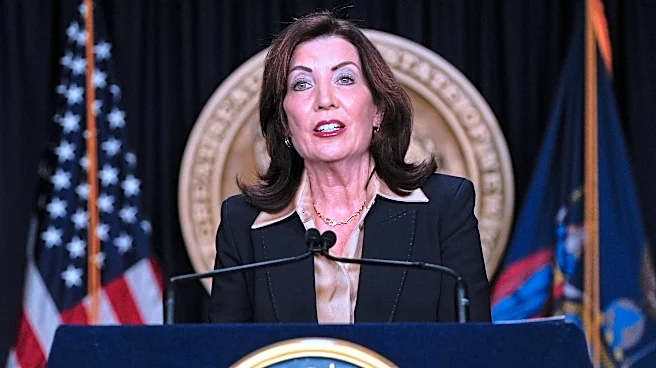
Governor Kathy Hochul's recent budget agreement with the New York State Legislature has been criticized for exacerbating the state's financial challenges. The $268.5 billion budget includes increased spending
by $14.5 billion, or 5.4%, without addressing the state's significant tax burden or its $27 billion cash shortfall projected through 2030. The budget introduces new taxes, such as a surcharge on New York City pieds-à-terre, and reverses pension reforms for public employees, potentially increasing future financial liabilities. Critics argue that the budget fails to provide substantial relief to New Yorkers and instead prioritizes spending that could lead to long-term economic difficulties.
Why It's Important?
The budget's implications are significant for New York's economic health and its residents. By increasing spending and introducing new taxes, the budget may place additional financial strain on taxpayers and businesses, potentially driving economic activity out of the state. The reversal of pension reforms could lead to increased public sector costs, affecting future budgets and taxpayer obligations. The budget's approach to climate mandates and auto-insurance reforms is seen as insufficient to address the state's affordability issues, which could impact New York's competitiveness and quality of life.
What's Next?
As the budget is implemented, there may be increased debate and scrutiny over its long-term impacts on New York's economy and fiscal health. Stakeholders, including taxpayers, businesses, and policymakers, may push for further reforms to address the state's financial challenges. The budget's provisions could also lead to political ramifications for Governor Hochul and other state leaders, particularly if economic conditions worsen or if the budget's measures fail to deliver the promised benefits.