



What's Happening?
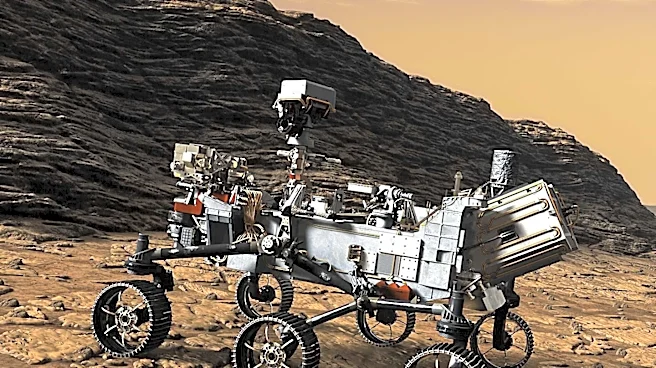
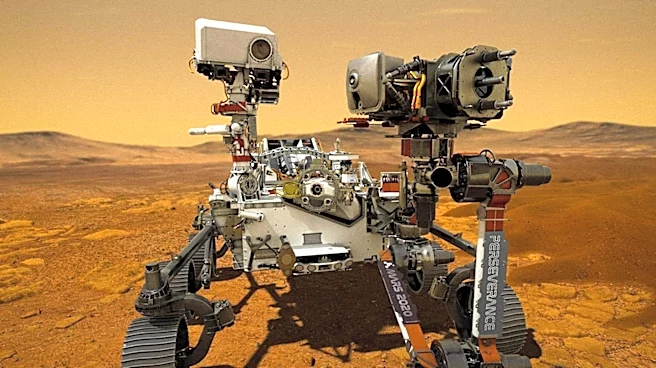
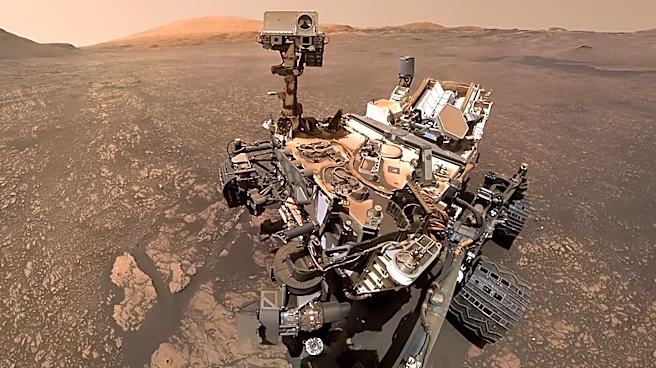
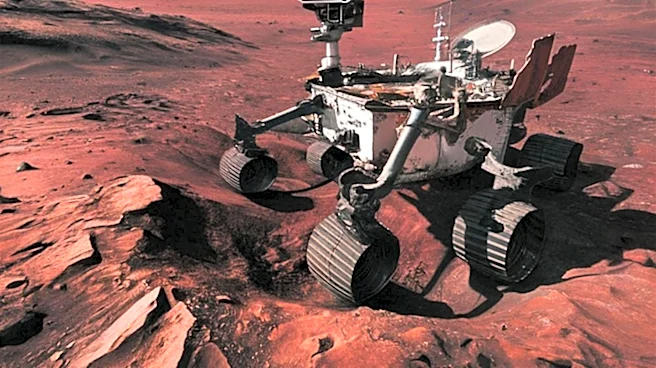
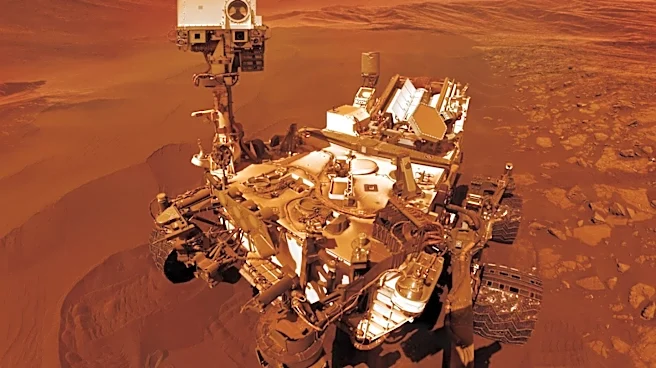
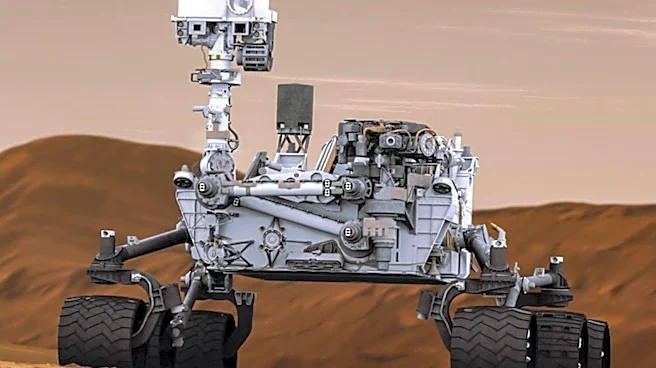
NASA's Curiosity rover has discovered a unique honeycomb-like landscape on Mars while exploring a region known as Valle Grande. The rover captured images of polygonal fractures, each measuring between 1.5 to 3 inches across, covering the Martian terrain.
This discovery marks the first time such extensive formations have been observed by Curiosity. The patterns extend across the landscape and climb the sides of a nearby butte called Miraflores. Scientists are investigating the origins of these formations, which may have resulted from processes such as repeated warming and cooling or compression of sediment. Curiosity's mission, which began 14 years ago, has significantly advanced understanding of Mars, revealing evidence of ancient water and conditions that could have supported microbial life.
Why It's Important?
The discovery of these polygonal formations is significant as it provides further evidence of Mars' dynamic geological history and its potential to have supported life. Understanding the processes that created these patterns could offer insights into the planet's past climate and environmental conditions. The findings contribute to the broader goal of determining Mars' habitability and the presence of water in its history. This information is crucial for future missions and the ongoing search for signs of past life on Mars. The data collected by Curiosity continues to shape scientific understanding of the red planet, influencing both current research and future exploration strategies.
What's Next?
Scientists will continue to analyze the data collected by Curiosity to determine the specific processes that led to the formation of the honeycomb patterns. This analysis may involve comparing the new findings with previous observations and conducting simulations to replicate the conditions on early Mars. The results could guide future missions aimed at exploring similar formations and further investigating Mars' geological history. Additionally, the ongoing study of Mars' surface features will inform the planning of human exploration missions, as understanding the planet's environment is essential for ensuring the safety and success of such endeavors.