







What's Happening?
Hapag-Lloyd has expressed cautious optimism about resuming shipping operations through the Strait of Hormuz following a two-week ceasefire agreement between the U.S. and Iran. The company anticipates that normal traffic throughout its network will take
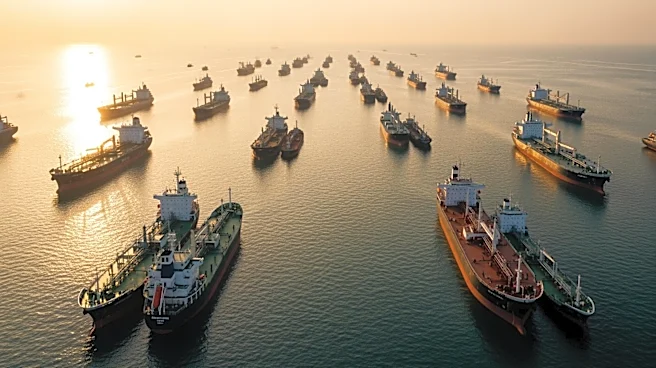
six to eight weeks to resume. CEO Rolf Habben Jansen highlighted the need for more security assurances despite the ceasefire, noting that the conflict in the Middle East continues to disrupt shipping and supply chains. Hapag-Lloyd plans to open bookings for the upper Gulf area, initially for selected markets, if the ceasefire holds. The company faces additional costs from the crisis, estimated at $50 million to $60 million per week, which may be passed on to customers. Approximately 1,000 ships remain stuck in the region, including six from Hapag-Lloyd.
Why It's Important?
The resumption of shipping through the Strait of Hormuz is crucial for global supply chains, as the region is a key transit point for oil and goods. The ceasefire agreement between the U.S. and Iran offers a potential easing of tensions, which could stabilize shipping operations and reduce disruptions. The financial impact on Hapag-Lloyd and other shipping companies is significant, with increased costs potentially affecting pricing for customers. The situation underscores the vulnerability of global trade to geopolitical conflicts, highlighting the need for robust contingency planning and risk management strategies in the logistics sector.
What's Next?
If the ceasefire holds, Hapag-Lloyd plans to gradually resume bookings in the upper Gulf area, potentially expanding to more markets. The company will continue to monitor the security situation closely, adjusting operations as needed. Other shipping companies are likely to follow suit, contingent on the stability of the ceasefire. The broader shipping industry will be watching for any signs of renewed conflict, which could further delay the resumption of normal operations. Stakeholders, including governments and international organizations, may engage in diplomatic efforts to ensure long-term stability in the region.